Hypertension is one of the most common chronic conditions physicians manage, and one of the hardest to control based on office readings alone. Blood pressure varies throughout the day, many patients experience “white coat” readings in the office, and medication adjustments often require several visits to get right. Remote patient monitoring (RPM) gives physicians a far more complete picture.
Here’s how RPM for hypertension improves blood pressure control and supports a sustainable practice program.
Why Hypertension Is Ideal for RPM
- Frequent readings matter: Multiple home readings over time reveal true blood pressure patterns better than occasional office measurements.
- Simple devices: Connected blood pressure cuffs are easy for most patients to use.
- Clear action thresholds: Care teams can set parameters for follow-up when readings are high or low.
- Large patient population: Most practices have many patients who could benefit.
Clinical Benefits
Better blood pressure control
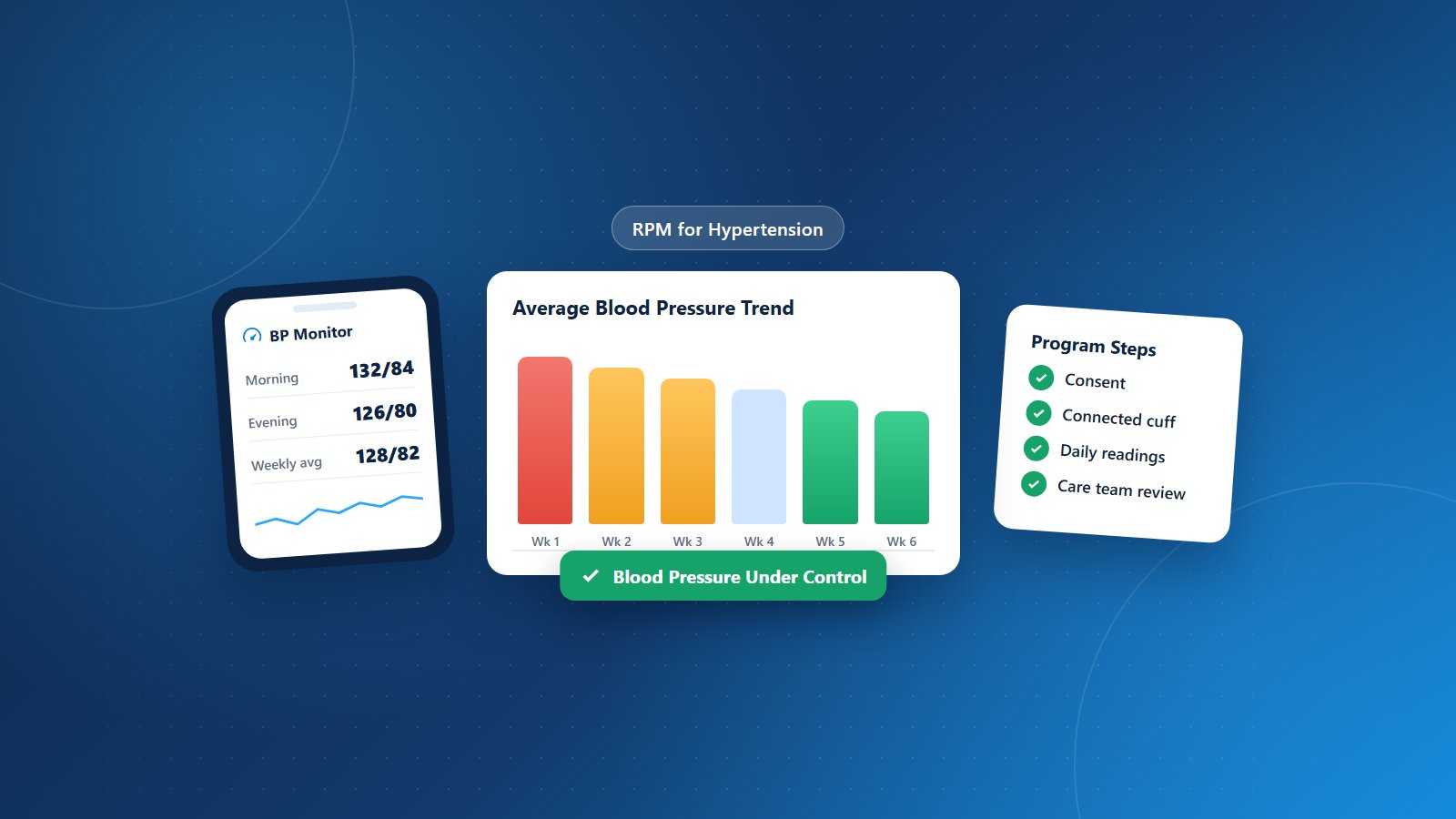
Regular home readings help physicians adjust medications sooner and more confidently, without waiting weeks for the next office visit.
Improved medication adherence
Patients who take daily readings and know their care team is watching are more engaged in their treatment and more likely to take medications as prescribed.
Earlier intervention
Trends toward dangerously high readings can be identified early, allowing timely outreach that may prevent complications.
Insight into white coat and masked hypertension
Home data helps distinguish patients whose blood pressure is only elevated in the office from those whose blood pressure is high at home but normal in the office.
Practice Benefits
- Support for blood pressure control quality measures.
- More efficient use of office visits.
- Stronger patient relationships and retention.
- A recurring, reimbursable service when program requirements are met.
Building a Hypertension RPM Program
1. Identify eligible patients
Start with patients whose blood pressure is uncontrolled, who recently started or changed medications or who have other cardiovascular risk factors.
2. Obtain consent and educate patients
Explain the program, cost sharing and how to take accurate readings: seated, rested, with the cuff positioned properly and at consistent times each day.
3. Provide connected devices
Use validated blood pressure cuffs that transmit readings automatically, ideally through cellular connections so patients don’t need Wi-Fi or a smartphone.
4. Set monitoring protocols
Define reading frequency, alert thresholds and escalation steps. Decide who reviews data and how quickly outreach occurs.
5. Communicate regularly
Interactive communication with patients about their readings is a key part of RPM. Use calls or messages to provide feedback, encouragement and education.
6. Document and bill accurately
Track device days, management time and communications to support compliant billing. Payer requirements for RPM are specific and can change, so review them regularly.
Combine RPM With Care Management
Many hypertension patients also have diabetes, kidney disease or heart disease. Pairing RPM with chronic care management provides both data-driven monitoring and comprehensive care coordination.
Launch Hypertension RPM With PRCM
Physicians Revenue Cycle Management helps practices implement remote patient monitoring with state-of-the-art technology, personalized care plans, monitoring support and accurate billing.
Ready to help your hypertension patients reach their goals? Let’s connect.