Telehealth has become part of everyday care for many practices, especially for follow-ups, behavioral health, chronic disease management and medication reviews. But telehealth rules and payer policies continue to change. Coverage, place-of-service requirements, audio-only allowances and patient location rules have shifted multiple times, and practices that depend heavily on virtual visits can see revenue disrupted when policies change.
Here’s how to build a telehealth contingency plan that keeps virtual care revenue stable.
Step 1: Know How Much Revenue Depends on Telehealth
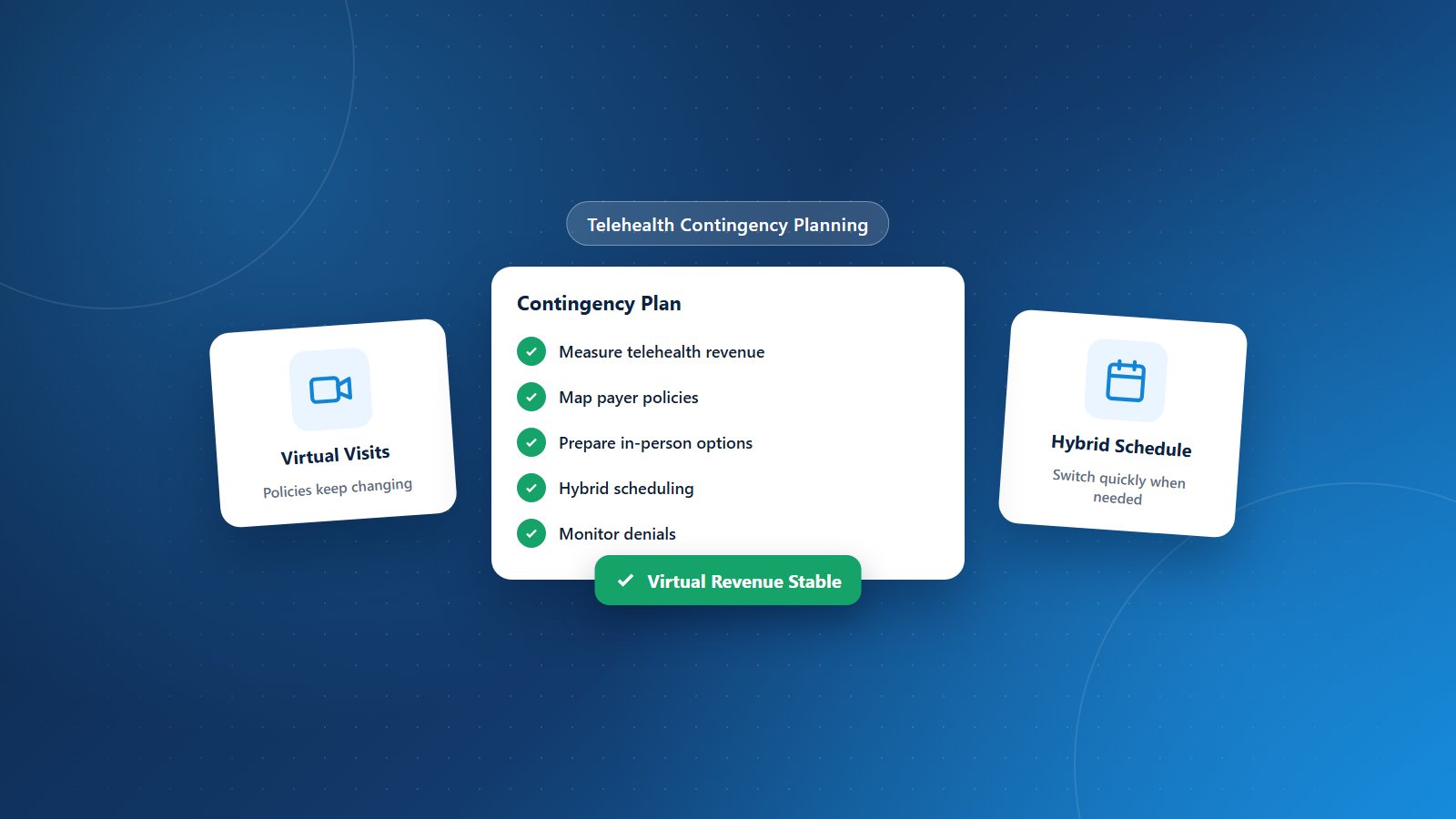
Run reports showing telehealth visit volume and revenue by payer, provider and service type. Understanding your exposure helps you prioritize planning.
Step 2: Map Payer Policies
Maintain a current reference of telehealth policies for your major payers, including covered services, video vs. audio-only coverage, patient location requirements, place-of-service codes and modifiers. Review it regularly.
Step 3: Identify Policy-Sensitive Services
Some telehealth services are more vulnerable to policy changes than others. Identify which services would be affected most if coverage changed and plan alternatives.
Step 4: Prepare In-Person Alternatives
If certain telehealth services lose coverage, be ready to convert visits to in-person appointments. Consider scheduling capacity, room availability and patient communication.
Step 5: Build Flexible Scheduling
Design schedules that can shift between virtual and in-person visits quickly. Hybrid schedules make it easier to adapt.
Step 6: Communicate With Patients
Prepare templates to inform patients about changes in visit options or coverage. Clear communication prevents missed appointments and surprise bills.
Step 7: Monitor Telehealth Claims Closely
Track telehealth denials separately. Sudden increases may signal a payer policy change that requires immediate workflow adjustments.
Step 8: Diversify Virtual Care Services
Services such as remote patient monitoring and chronic care management provide ongoing virtual support with their own billing structures, reducing reliance on telehealth visits alone.
Step 9: Keep Credentialing and Licensure Current
Providers seeing patients across state lines need appropriate licenses and payer enrollment. Read our guide to telehealth credentialing.
Step 10: Assign Responsibility
Designate someone to monitor telehealth policy updates and lead the response when changes occur.
Telehealth Billing Best Practices
Accurate place-of-service codes, modifiers and documentation remain essential no matter how policies evolve. Review our telehealth billing essentials.
Telehealth Support From PRCM
Physicians Revenue Cycle Management tracks payer telehealth policies, adjusts billing workflows and monitors denials so practices can keep virtual care financially sustainable. Learn more about our revenue cycle management.
Is your telehealth revenue protected from policy changes? Let’s connect.