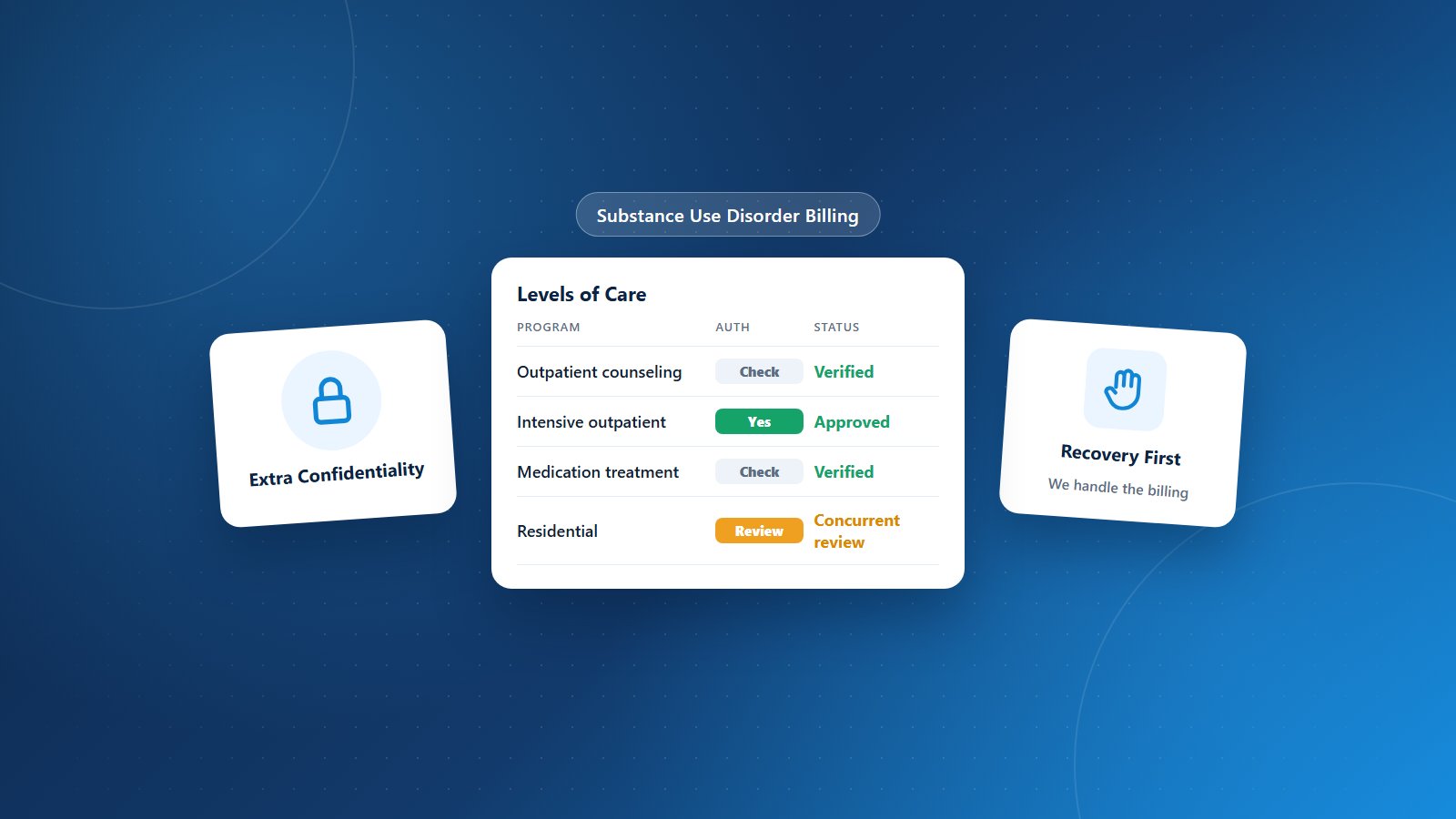
Substance use disorder (SUD) treatment saves lives. Outpatient programs, medication for addiction treatment, counseling, intensive outpatient services and residential care help patients recover and rebuild. But SUD treatment billing is complex and carries strict compliance requirements, from heightened confidentiality protections to authorization rules and program-specific coding.
Here are key considerations for addiction treatment providers to bill accurately and compliantly.
1. Confidentiality Rules Are Stricter
SUD treatment records may be subject to federal confidentiality regulations that provide additional protections beyond HIPAA. These rules can affect how information is shared with payers, other providers and family members, and may require specific patient consent for disclosures.
Best practice: Train staff on the confidentiality rules that apply to your program, use compliant consent forms and make sure billing workflows protect patient information.
2. Verify Benefits Carefully
SUD benefits vary widely between plans, and some plans carve out behavioral health benefits to separate administrators. Coverage may differ by level of care.
Best practice: Verify benefits, the responsible payer, levels of care covered, authorization requirements and patient cost sharing before admission.
3. Obtain and Track Authorizations
Many plans require authorization for intensive outpatient, partial hospitalization and residential levels of care, often with concurrent reviews to continue treatment.
Best practice: Track authorized days or units and schedule concurrent reviews before authorizations expire.
4. Code the Right Level of Care
SUD treatment is billed differently depending on level of care, type of service and payer. Services may be billed as individual therapy, group therapy, medication management, per diem program services or bundled payments. Use the codes and billing formats each payer requires.
5. Document Medical Necessity
Payers use clinical criteria to determine the appropriate level of care. Documentation should include assessments, treatment plans with measurable goals, progress notes and justification for continued stay or level changes.
6. Bill Medication Services Correctly
Medication for addiction treatment may involve office visits, drug administration, drug supply and laboratory testing. Make sure each component is billed according to payer rules.
7. Handle Drug Testing Compliantly
Drug testing is common in SUD treatment and frequently audited. Testing should be individualized, ordered based on clinical need and documented appropriately. Avoid standing orders that test every patient the same way regardless of clinical need.
8. Credential All Clinicians
SUD programs often employ physicians, nurse practitioners, licensed counselors and social workers. Each clinician must be credentialed with the payers that cover their services. See our credentialing services.
9. Audit Regularly
Because SUD treatment billing receives heightened scrutiny, periodic audits help programs catch documentation and coding issues early.
SUD Billing Support From PRCM
Physicians Revenue Cycle Management supports substance abuse and rehabilitation providers with benefit verification, authorization tracking, specialty coding and compliant billing workflows. Our medical billing services help treatment programs stay focused on recovery. See the specialties we serve.
Need billing support for your treatment program? Let’s connect.