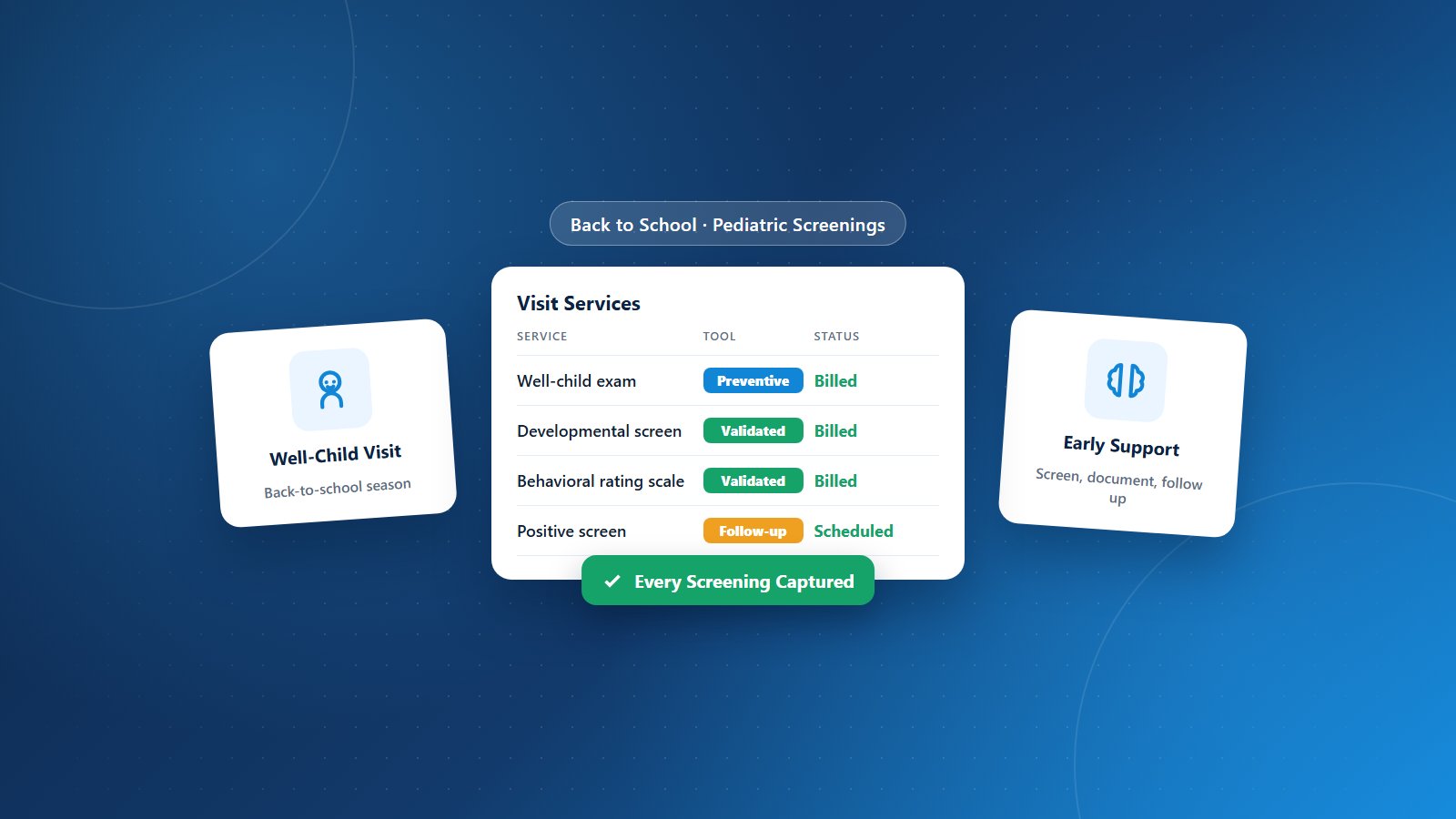
As children head back to school, pediatric practices see a surge of well-child visits. Alongside physical exams and vaccines, these visits are an important opportunity to screen for developmental, behavioral and emotional concerns, such as attention difficulties, anxiety, depression and developmental delays. Standardized screenings help identify children who need support early, and many are separately billable when performed correctly.
Here’s how pediatric practices can bill behavioral and developmental screenings alongside well-child visits.
Why Screening Matters
- Early identification leads to earlier support and better outcomes.
- Pediatric guidelines recommend routine developmental and behavioral screening at various ages.
- Screenings support quality measures in pediatric care.
- Many screenings are separately reimbursable.
Common Pediatric Screenings
- Developmental screening in young children using standardized instruments.
- Autism screening at recommended ages.
- Behavioral and emotional assessments, such as attention-related rating scales.
- Depression screening for adolescents.
- Maternal depression screening during infant visits, where payers allow.
Billing Best Practices
1. Use standardized, validated instruments
Screening codes typically require the use of standardized instruments. Informal questions or observations generally don’t qualify.
2. Document the instrument and result
Record the name of the screening tool, the score or result and the plan for follow-up if the screen is positive.
3. Bill screenings separately from the well visit
Many payers allow standardized screening codes to be billed in addition to the preventive visit. Check each payer’s policy, including any required modifiers.
4. Know payer-specific rules
Medicaid programs and commercial payers may have different coverage, frequency limits and documentation requirements for screenings.
5. Address problems identified
If a screening reveals a concern that requires significant additional evaluation or management, a separate problem-oriented service may be billable with documentation and appropriate modifier use. See our modifier 25 guide.
6. Plan follow-up care
Positive screens should lead to follow-up visits, referrals or behavioral health services. Track these to make sure children receive support.
Back-to-School Readiness
Prepare templates with built-in screening tools, train staff to administer screenings efficiently and verify payer coverage before the rush. Read our back-to-school pediatric billing guide and our vaccine billing best practices.
Pediatric Billing Support From PRCM
Physicians Revenue Cycle Management supports pediatric practices with preventive care, screening and vaccine billing through our medical billing services. See the specialties we serve.
Ready for back-to-school season? Let’s connect.