September is Pain Awareness Month, recognizing the many people living with chronic pain and the clinicians who help them. Pain management practices offer a range of interventional treatments, including injections, nerve blocks, ablations and other procedures, that can dramatically improve quality of life. Nearly all of them face prior authorization requirements, and authorization delays and denials are among the biggest operational challenges in the specialty.
Here are strategies to help pain management practices secure approvals faster and reduce denials.
Why Pain Management Authorizations Are Challenging
- Most interventional procedures require prior authorization from commercial and Medicare Advantage plans.
- Payers often require documented failure of conservative treatment before approving procedures.
- Repeat procedures may have frequency limits and require evidence of prior relief.
- Imaging, diagnostic blocks and procedure sequences must align with payer criteria.
Strategy 1: Know Each Payer’s Criteria
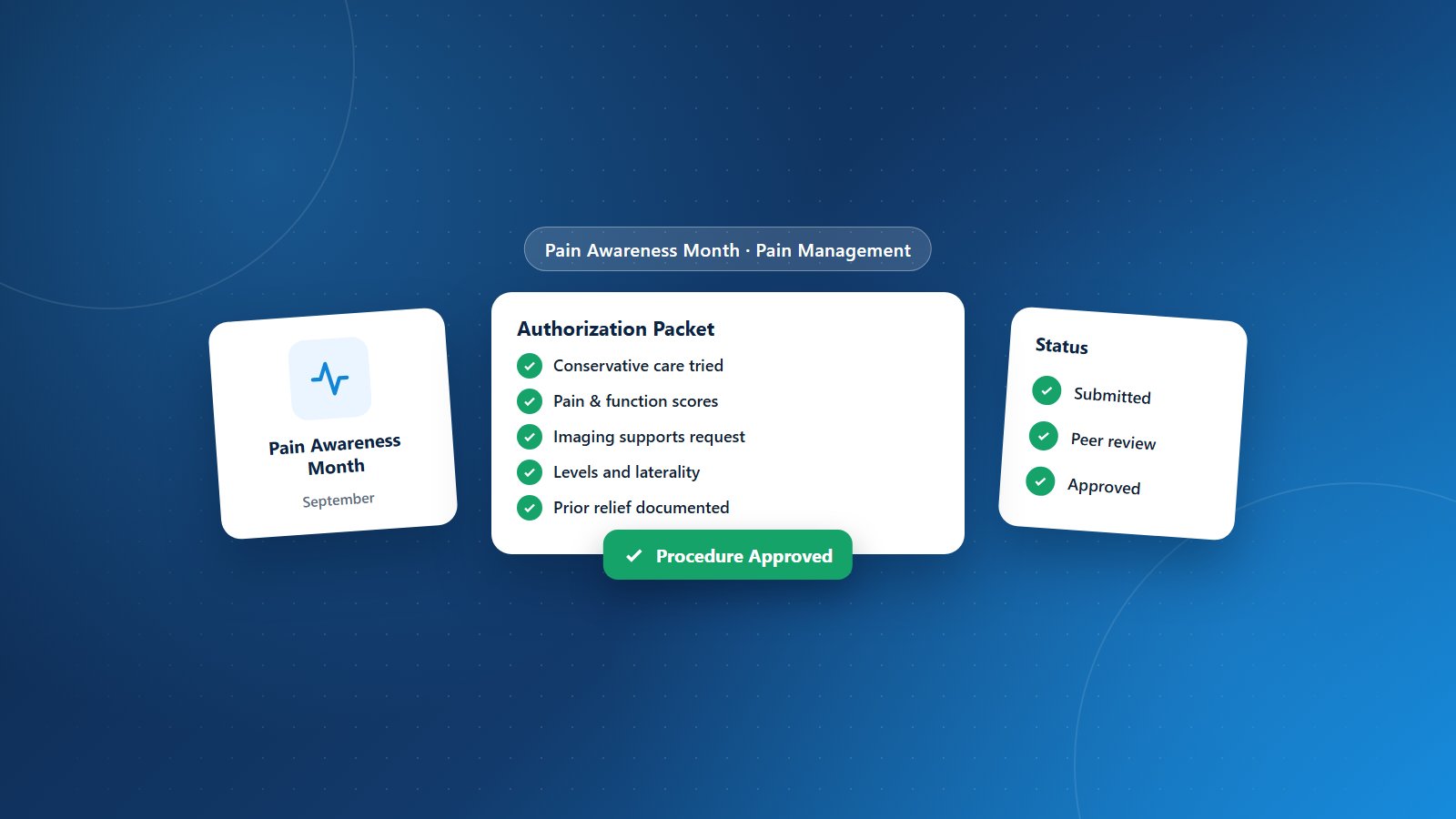
Build a reference of authorization requirements and clinical criteria for your most common procedures by payer. Include required documentation, conservative treatment duration, imaging requirements and repeat procedure rules.
Strategy 2: Document Conservative Care Thoroughly
Payers commonly want evidence that patients tried treatments such as physical therapy, medications, home exercise or chiropractic care before procedures. Document the type, duration and outcome of each treatment.
Strategy 3: Capture Functional Impact and Pain Scores
Document pain levels, how pain affects daily activities and work, and physical exam findings. For repeat procedures, document the degree and duration of relief from prior procedures.
Strategy 4: Align Imaging and Diagnosis
Make sure imaging results, diagnoses and the procedure requested all support each other. Diagnosis codes should be specific about location, laterality and cause.
Strategy 5: Submit Complete Requests the First Time
Include clinical notes, imaging reports, treatment history and the specific procedure, levels and laterality with the initial request. Incomplete requests lead to delays and requests for more information.
Strategy 6: Track Authorizations Closely
Record the approved procedure codes, levels, sides, number of sessions, dates and expiration for every authorization. Confirm before each procedure that what’s scheduled matches what’s approved.
Strategy 7: Use Peer-to-Peer Reviews
When a request is denied, a peer-to-peer discussion between the treating physician and the payer’s medical reviewer can often resolve the issue quickly. Prepare a concise summary of the clinical rationale.
Strategy 8: Appeal Strategically
Track denial reasons by payer and procedure. Appeals with additional documentation that directly addresses the denial reason have the best chance of success.
Strategy 9: Communicate With Patients
Patients in pain want answers quickly. Explain the authorization process, expected timelines and next steps to reduce frustration and keep them engaged in care.
Beyond Authorization: Clean Claims
Once procedures are performed, accurate coding of levels, laterality, imaging guidance and any drugs administered is essential. Regular billing audits help catch errors in this procedure-heavy specialty.
Pain Management Billing Support From PRCM
Physicians Revenue Cycle Management supports pain management practices with dedicated authorization specialists, specialty coders and denial management. Our pre-encounter services and medical billing services help patients get treatment sooner and practices get paid accurately. See all specialties we serve.
This Pain Awareness Month, let us handle the authorizations. Let’s connect.