Physicians and advanced practice providers who care for patients in nursing homes and skilled nursing facilities (SNFs) provide essential care to some of the most medically complex patients. But billing for facility-based visits follows different rules than office visits. Place of service, visit types, frequency requirements and coordination with the facility all affect payment.
Here are the essentials of nursing home and SNF physician billing.
Understand the Setting
Nursing facility patients may be in a skilled nursing stay, typically following a hospitalization and receiving rehabilitation or skilled care, or in long-term custodial care. The setting affects place-of-service codes, which visits are required and how services are covered.
1. Use the Correct Place of Service
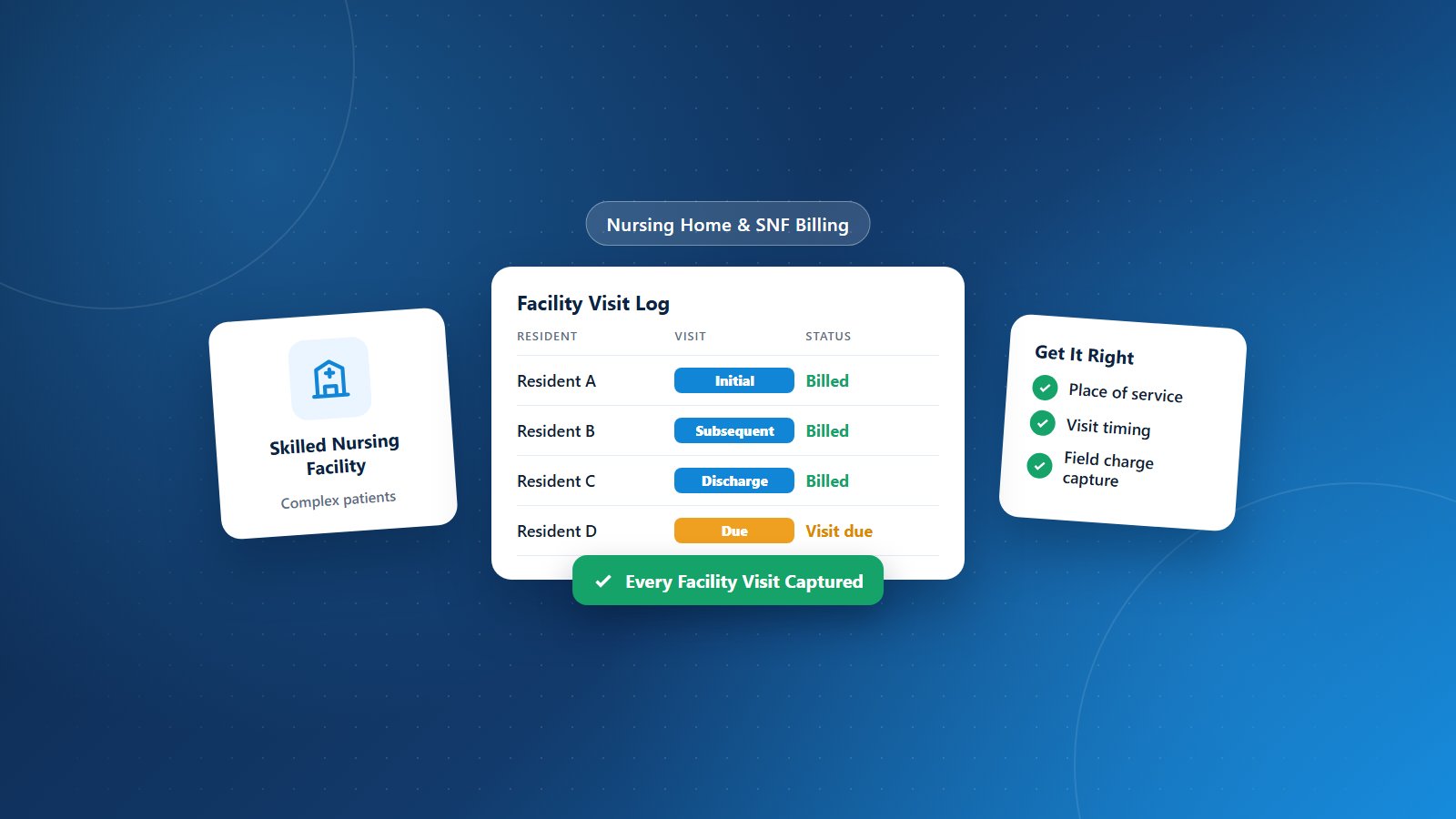
Place-of-service codes distinguish skilled nursing facilities from nursing facilities and other settings. Incorrect place of service can lead to denials or incorrect payment.
2. Use Nursing Facility Visit Codes
Visits in nursing facilities use specific E/M codes for initial and subsequent care, discharge and other services, rather than office visit codes. Level selection generally depends on medical decision making or time, consistent with current guidelines.
3. Know Required Visit Timing
Regulations and payer rules may require physician visits at certain intervals for nursing facility residents. Track visit schedules for every patient to stay compliant.
4. Document Thoroughly
Facility patients often have multiple chronic conditions, frequent medication changes and complex care plans. Documentation should reflect problems addressed, data reviewed, coordination with facility staff and decision making.
5. Coordinate With the Facility
Obtain accurate patient demographics and insurance information from the facility. Confirm whether the patient is in a covered skilled stay or another payer arrangement.
6. Understand Consolidated Billing Considerations
During certain covered skilled stays, some services are billed by the facility rather than individual providers. Physician professional services are generally billed separately, but other services may be included in facility billing. Understanding these rules prevents denials and duplicate billing.
7. Capture Care Management Opportunities
Transitional care after discharge from a facility to home may support transitional care services. Coordinating with primary care avoids duplicate billing.
8. Verify Credentialing
Providers must be credentialed with the payers covering facility residents, including Medicare Advantage plans that may have specific networks. See our credentialing services.
9. Track Charges From the Field
Facility visits happen outside the office, which can lead to missed charges. Use mobile charge capture tools or daily logs so every visit is billed.
10. Audit Regularly
Facility billing is frequently reviewed. Periodic audits confirm visit levels, place of service and documentation are correct.
Nursing Home Billing Support From PRCM
Physicians Revenue Cycle Management supports providers who care for nursing home and SNF residents with accurate facility coding, charge capture and credentialing through our medical billing services. See the specialties we serve.
Need help with facility-based billing? Let’s connect.