March is National Kidney Month, a time to raise awareness about kidney health and the millions of people living with chronic kidney disease (CKD). Nephrology practices care for some of the most complex patients in medicine, often managing multiple chronic conditions, dialysis and transplant follow-up at the same time. That complexity carries over to billing.
Nephrology billing involves monthly services, dialysis-related coding, facility-based visits and strict documentation rules. Here are practical tips to help nephrology practices code accurately and reduce denials.
What Makes Nephrology Billing Unique
- Monthly dialysis-related services billed based on the number of visits during the month and patient age.
- Multiple sites of service, including offices, dialysis centers, hospitals and nursing facilities.
- Home dialysis patients with different billing approaches than in-center patients.
- Complex comorbidities such as diabetes, hypertension and heart failure that require careful diagnosis coding.
- Coordination with other providers and dialysis facilities.
Tip 1: Track Monthly Visits Carefully
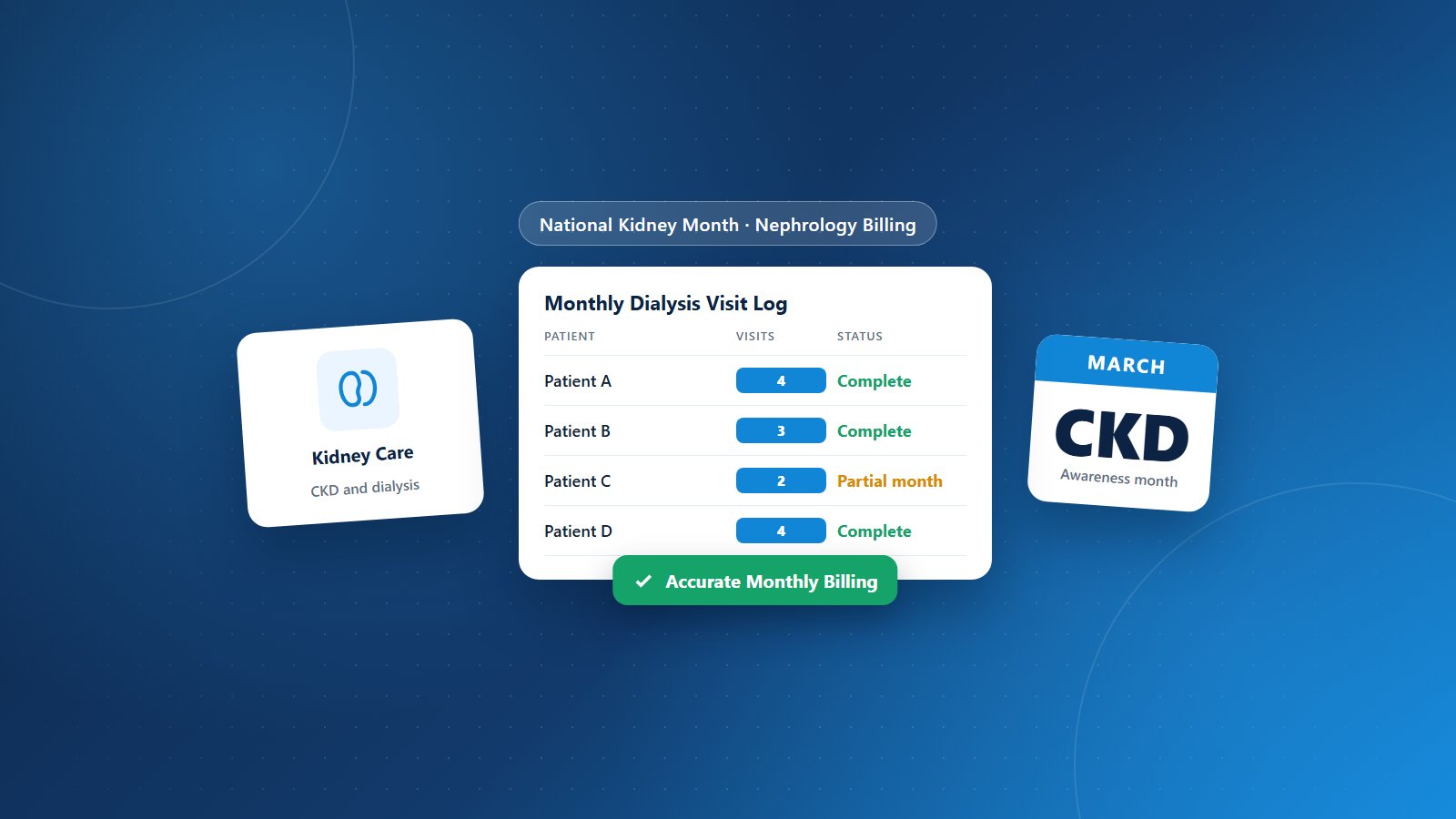
Dialysis-related monthly services are often billed once per month based on the number of face-to-face visits furnished. Accurate visit tracking is essential, since billing the wrong level or missing visits leads to underpayment or compliance risk. Use a monthly tracking log for every dialysis patient.
Tip 2: Handle Partial Months Correctly
Patients may start dialysis mid-month, be hospitalized, travel or transfer to another facility. Partial-month situations often follow different billing rules. Document dates carefully and review payer guidance for these scenarios.
Tip 3: Distinguish Dialysis-Related and Unrelated Services
Services unrelated to dialysis care, such as treatment of a separate acute problem, may be billable separately when properly documented. Make sure documentation clearly explains the unrelated condition and the work performed.
Tip 4: Code CKD and Comorbidities to the Highest Specificity
Accurate staging of CKD and complete coding of related conditions supports medical necessity and accurately reflects patient complexity for risk adjustment. Ensure documentation specifies the CKD stage and links related conditions when clinically appropriate.
Tip 5: Know Your Site-of-Service Rules
Nephrologists frequently see patients in hospitals and facilities. Use the correct place of service, verify hospital visit documentation and capture all inpatient and consult services accurately.
Tip 6: Verify Coverage and Coordination of Benefits
Patients with kidney failure may have complex coverage, including Medicare, employer plans and secondary insurance with specific coordination periods. Verify primary and secondary payers carefully to avoid denials and incorrect payments.
Tip 7: Use Care Management Programs
Patients with CKD often have multiple chronic conditions and benefit from chronic care management and remote monitoring of blood pressure and weight. These programs support better outcomes and add steady revenue.
Tip 8: Audit Regularly
Because nephrology billing is so detailed, periodic billing audits help catch visit-count errors, missed charges and documentation gaps before payers do.
Specialty Support for Nephrology Practices
Physicians Revenue Cycle Management supports nephrology practices with coders who understand monthly dialysis billing, facility visits and complex coordination of benefits. Our medical billing services help nephrologists get paid accurately for the complex care they provide. Explore the specialties we serve.
This National Kidney Month, make sure your billing is as healthy as your patient care. Let’s connect.