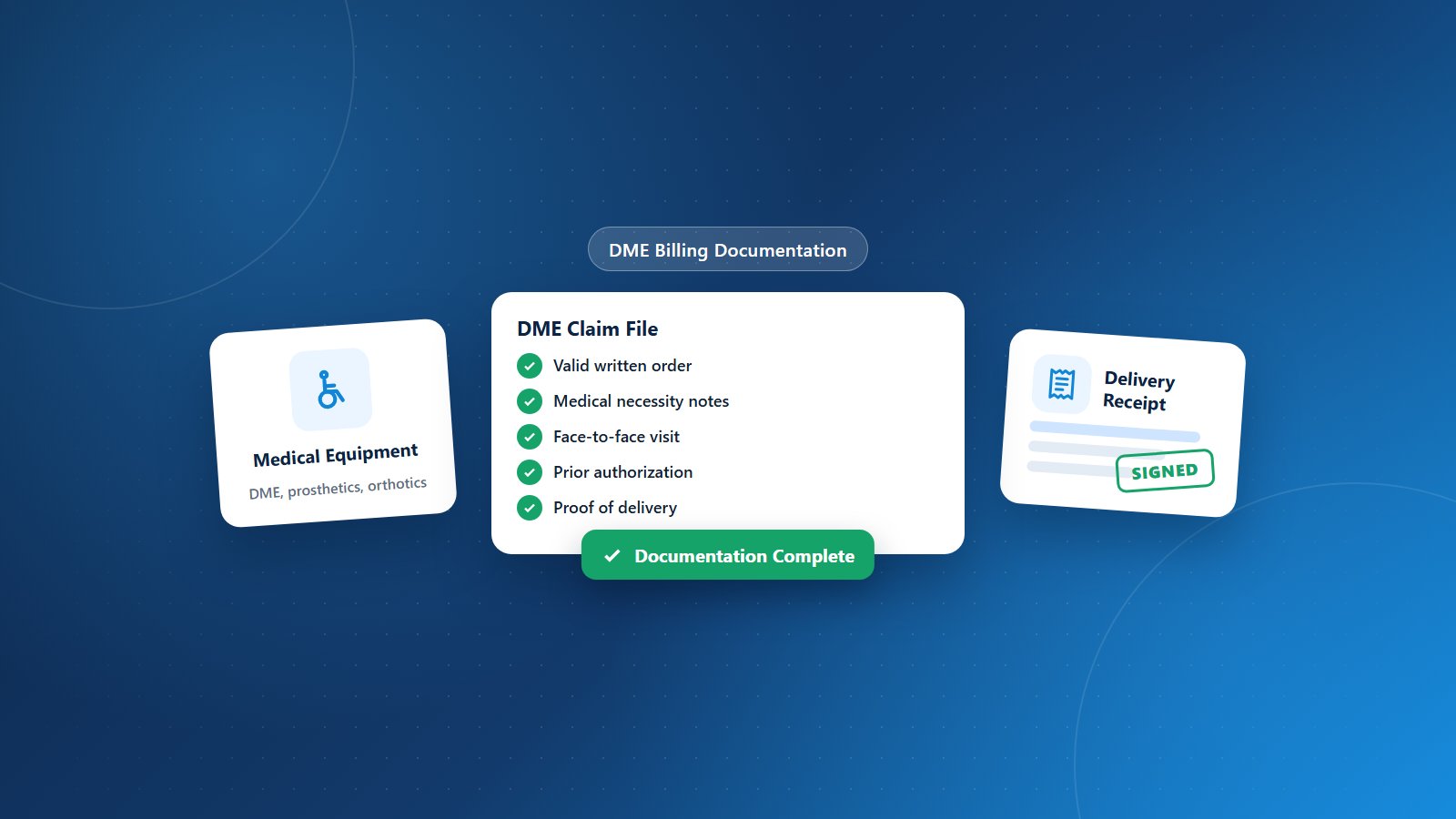
Durable medical equipment (DME), prosthetics, orthotics and supplies help patients live more independently, from wheelchairs and hospital beds to braces, prosthetic limbs, CPAP machines and diabetic supplies. But DME billing is among the most documentation-intensive areas in healthcare. Claims depend not only on what the supplier does, but also on orders and medical records from the prescribing provider. Missing details lead to denials, delays and audit risk.
Here are the documentation requirements that keep DME billing denial-free.
1. A Complete, Valid Order
Every DME item requires a valid order from the treating practitioner. Orders generally must include required elements such as patient name, item description, quantity, prescriber information, date and signature. Some items require specific order types or timing.
Tip: Use standardized order templates for referring providers and review every order for completeness before dispensing.
2. Medical Necessity Documentation
The prescribing provider’s medical record must support why the patient needs the item, including diagnosis, functional limitations, prior treatments and how the item will help. A signed order alone is usually not enough.
Tip: Request relevant clinical notes from prescribers and review them against payer coverage criteria.
3. Face-to-Face Encounters When Required
Certain items require documentation of a recent face-to-face evaluation by the treating practitioner related to the need for the item.
Tip: Know which items require face-to-face documentation and confirm it’s in the record before delivery.
4. Prior Authorization
Many payers require prior authorization for power mobility devices, certain prosthetics, orthotics and other high-cost items.
Tip: Verify requirements before ordering or fitting equipment.
5. Proof of Delivery
Suppliers must document that the item was delivered to the patient, including date, item details and signature.
6. Correct Coding and Modifiers
DME claims use specific codes and often require modifiers indicating whether items are new, used, rented or purchased, as well as other details. Errors cause denials.
7. Rental and Continued Need Documentation
For rental items, ongoing documentation may be required to show the patient continues to use and benefit from the equipment, especially for items with usage requirements.
8. Refill Documentation for Supplies
Recurring supplies often require documentation of refill requests and confirmation that the patient needs more.
9. Coordinate With Prescribers
Strong relationships with referring physicians make documentation easier. Provide clear checklists of what’s needed for common items.
10. Audit Regularly
DME claims are frequently reviewed. Periodic billing audits help catch documentation gaps early.
DME Billing Support From PRCM
Physicians Revenue Cycle Management supports DME, prosthetics and orthotics providers with document review, authorization management, coding and denial follow-up. Our medical billing services help suppliers get paid for the equipment patients depend on. See the specialties we serve.
Tired of DME documentation denials? Let’s connect.