May is Mental Health Awareness Month. Primary care is where many people with depression, anxiety and other behavioral health conditions first seek help, yet access to specialty mental health care is often limited. Behavioral health integration (BHI) brings mental health support directly into the primary care setting, and the collaborative care model is one of the most effective, evidence-based ways to do it.
Here’s how behavioral health integration works and how practices can bill for collaborative care services.
What Is Behavioral Health Integration?
BHI is an approach in which primary care practices systematically identify, treat and monitor patients with behavioral health conditions, often with support from behavioral health care managers and psychiatric consultants. It helps patients receive mental health care where they already feel comfortable.
The Collaborative Care Model
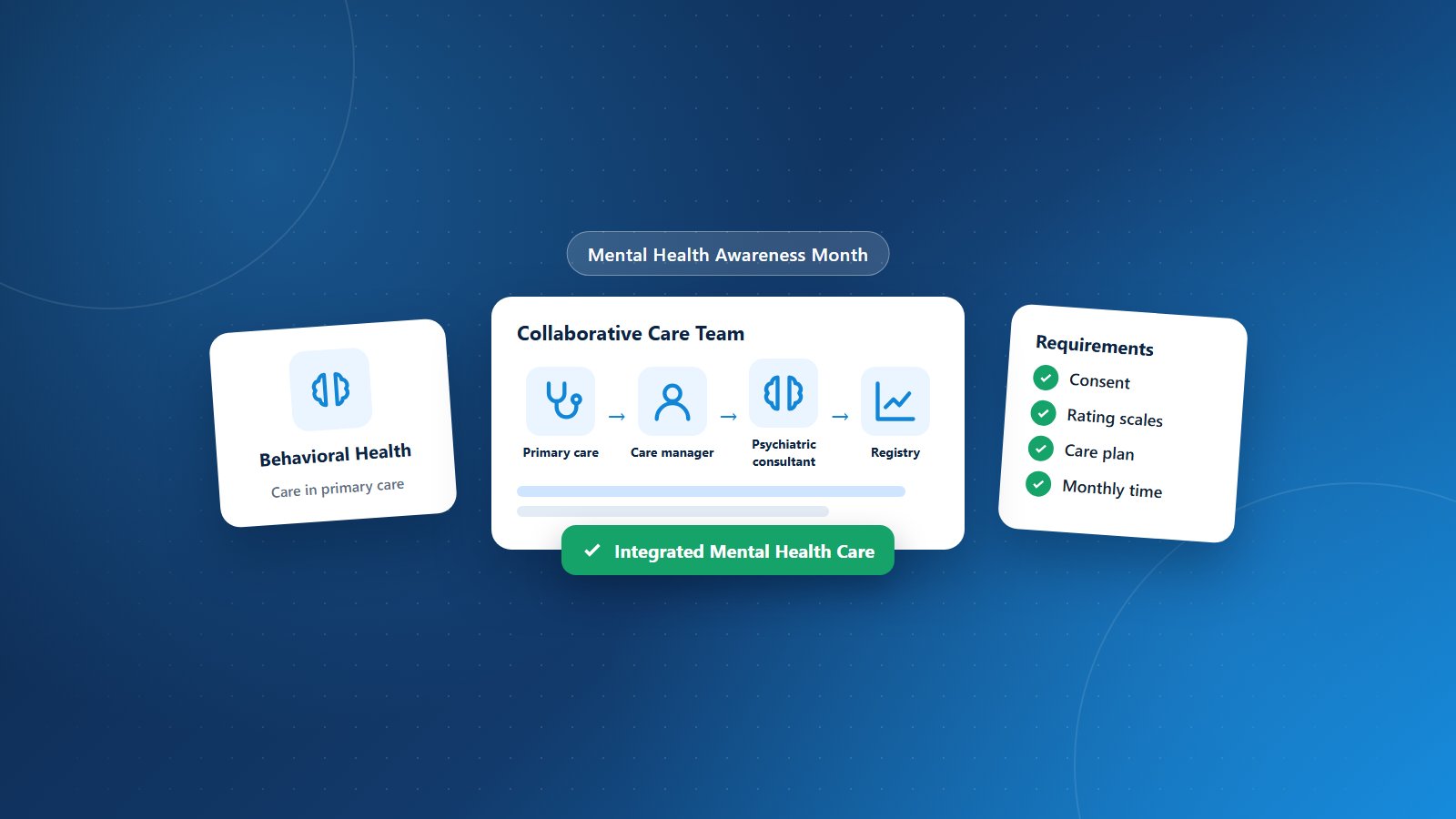
Collaborative care is a specific, structured form of BHI. It involves a team of three:
- The treating practitioner (usually a primary care physician or qualified practitioner), who leads care.
- A behavioral health care manager, who provides care management, tracks symptoms with validated tools and delivers brief interventions.
- A psychiatric consultant, who reviews the caseload regularly and makes treatment recommendations.
Patients are tracked in a registry, and treatment is adjusted based on measured progress toward goals.
Billing for Collaborative Care and BHI
Collaborative care and general behavioral health integration services are billed based on care management time per calendar month, with separate codes for initial and subsequent months and for additional time. General BHI codes may be used for less structured integration models. Requirements generally include:
- An initiating visit with the billing practitioner for new patients or those not seen recently.
- Documented patient consent, including cost-sharing information.
- Use of validated rating scales to track symptoms.
- A care plan with measurable goals.
- Registry tracking (for collaborative care).
- Regular psychiatric consultation (for collaborative care).
- Accurate time tracking by month.
Payer coverage and requirements vary, so verify each payer’s policies before launching.
Benefits of Behavioral Health Integration
- Better outcomes: Collaborative care has been shown to improve depression and anxiety outcomes.
- Improved access: Patients receive care faster without waiting for specialty appointments.
- Whole-person care: Mental and physical health are managed together, which matters for chronic disease.
- Quality performance: Supports depression screening and follow-up measures.
- Sustainable revenue: Monthly billable services support the staffing needed.
Getting Started
- Screen patients for depression and anxiety using validated tools.
- Hire or train a behavioral health care manager.
- Establish a psychiatric consultant relationship, in person or virtual.
- Set up a registry to track patients and outcomes.
- Build documentation and time-tracking workflows.
- Confirm payer coverage and billing requirements.
BHI and Chronic Care Management
Many patients with behavioral health conditions also have chronic medical conditions. Practices can combine BHI with chronic care management when each service’s requirements are met. For specialty practices, read our guide to behavioral health billing challenges.
Integrated Care Support From PRCM
Physicians Revenue Cycle Management helps practices build care management programs, including documentation, time tracking and billing for integrated services. Our medical billing services make integrated care financially sustainable.
This Mental Health Awareness Month, bring mental health care closer to your patients. Let’s connect.