AI-powered ambient scribes are changing how physicians document care. These tools listen to patient visits and generate draft clinical notes, reducing time spent typing and allowing physicians to focus on patients. Many physicians report less burnout and more face-to-face time. But documentation still drives coding, billing and compliance. AI scribes introduce new risks that practices need to manage.
Here are the coding and compliance risks of AI scribes and how to address them.
How AI Scribes Affect Documentation
AI scribes capture conversation, organize it into structured notes and may suggest assessments, plans or even codes. The resulting notes can be more detailed than traditional documentation, which can be helpful, but detail isn’t the same as accuracy.
Risk 1: Inaccurate or Fabricated Content
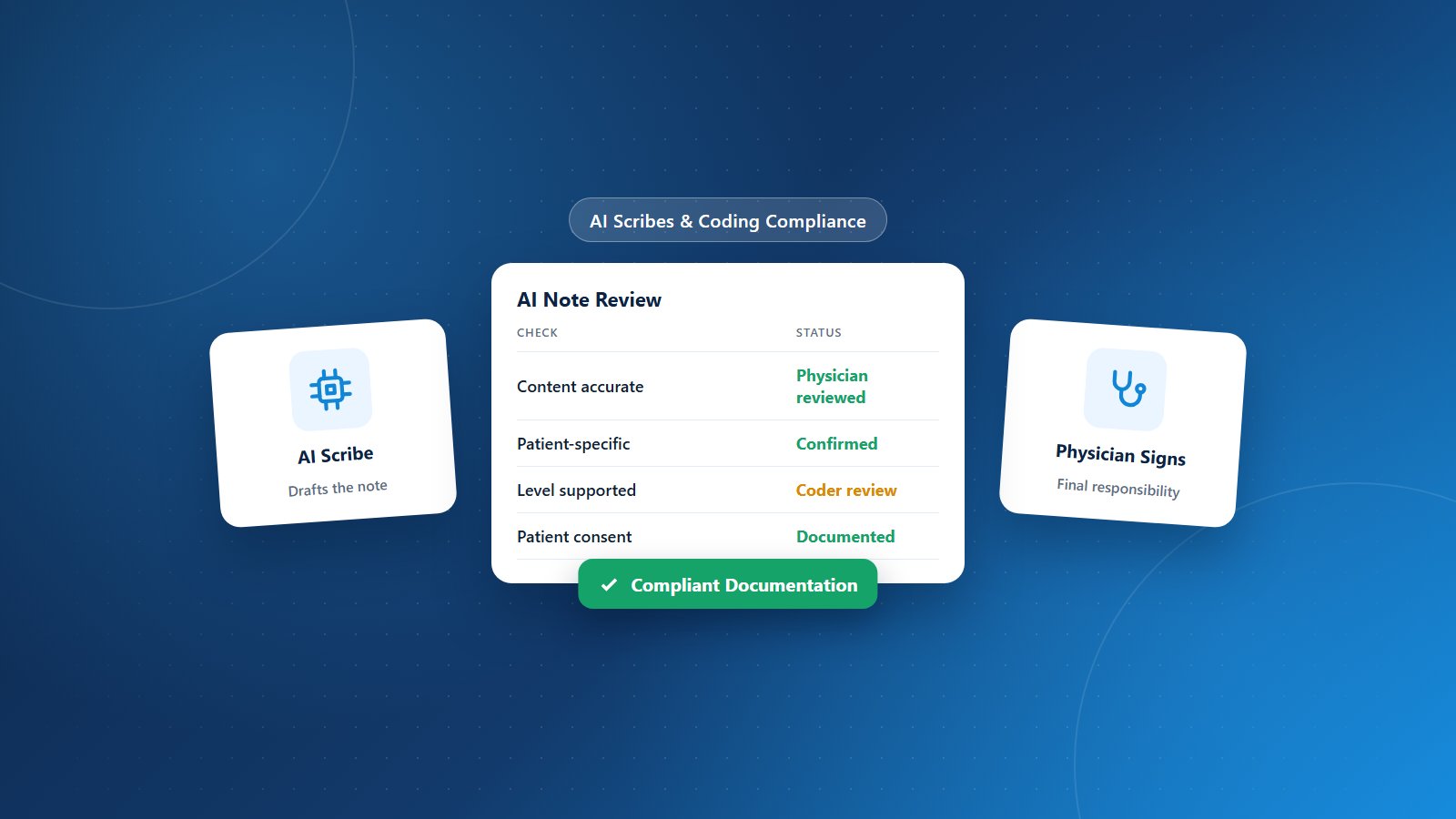
AI tools can mishear, misinterpret or generate statements that weren’t said or performed. A note might include an exam element that wasn’t done or a history detail the patient didn’t provide.
Safeguard: Physicians must review and edit every AI-generated note before signing. The signing provider remains responsible for the content.
Risk 2: Documentation Inflation
More detailed notes may appear to support higher levels of service than the care actually provided warranted. Coding based on volume of documentation rather than medical necessity and decision making creates audit risk.
Safeguard: Code based on medical decision making or time as appropriate, and audit E/M distributions after implementing AI scribes. See our guide to E/M coding accuracy.
Risk 3: Cloned or Generic Language
AI-generated notes can become repetitive across patients, which payers may view as cloned documentation.
Safeguard: Ensure notes reflect patient-specific findings and reasoning.
Risk 4: Code Suggestions Without Review
Some tools suggest diagnosis or procedure codes. Accepting suggestions without review can lead to overcoding, undercoding or unsupported diagnoses.
Safeguard: Have certified coders review AI-suggested codes, especially during the first months of use.
Risk 5: Privacy and Consent
Recording patient conversations raises privacy considerations. Patients may need to be informed, and the vendor must protect data appropriately.
Safeguard: Establish consent processes, confirm vendor security and sign business associate agreements. Read about business associate agreements.
Risk 6: Inconsistent Adoption
When some providers use AI scribes and others don’t, documentation and coding patterns may diverge.
Safeguard: Provide consistent training and policies across the practice.
Building a Compliance Plan for AI Documentation
- Create a written policy for AI scribe use and provider review.
- Train providers on reviewing and editing AI notes.
- Audit a sample of AI-assisted notes soon after implementation and periodically after.
- Monitor coding patterns for unexpected shifts.
- Review vendor contracts for data protection.
Audit Support From PRCM
Physicians Revenue Cycle Management’s documentation and coding audits help practices adopt AI scribes confidently by verifying that notes are accurate and coding is supported.
Using AI scribes? Make sure your documentation holds up. Let’s connect.