August is National Immunization Awareness Month, highlighting the importance of vaccines at every age. For pediatric practices, immunizations are a core part of care, and a significant billing workload. Children receive many vaccines across their well-child visits, often several at a time, and each vaccine claim has multiple components. Small errors repeated across many claims add up to meaningful lost revenue.
Here are vaccine billing best practices for pediatric practices.
Understand Each Component
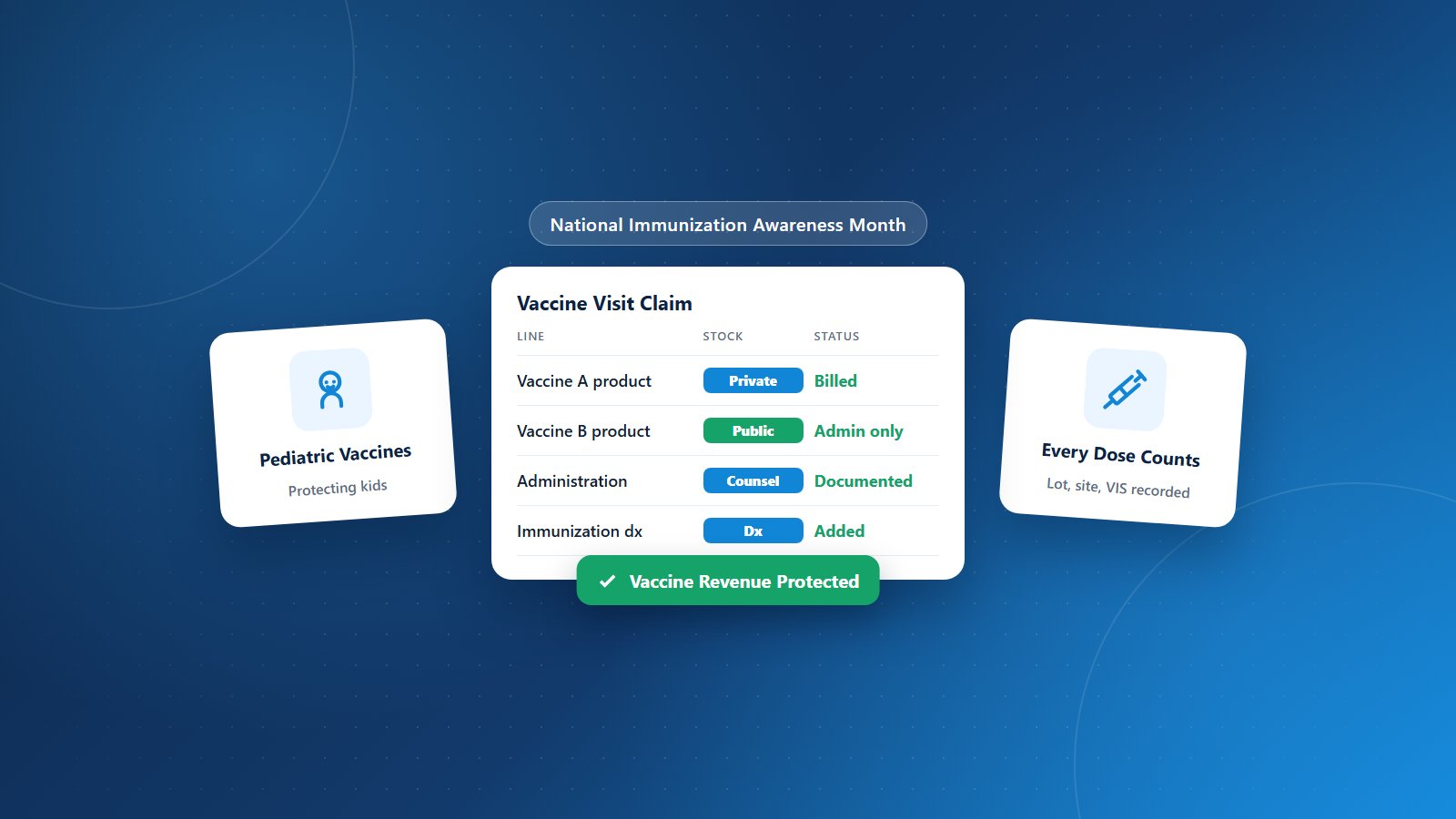
Every vaccine claim typically includes:
- Vaccine product code: Identifies the specific vaccine.
- Administration code(s): For giving the vaccine, which may vary based on route, number of vaccine components and whether counseling was provided.
- Diagnosis code: An encounter-for-immunization code.
Best Practice 1: Bill Administration Correctly
Pediatric administration codes may differ depending on whether the physician or qualified provider counseled the patient and family and on the number of vaccine components. Document counseling when it occurs, and follow payer rules for which administration codes apply.
Best Practice 2: Separate Public and Private Vaccine Stock
Many practices participate in public vaccine programs that supply vaccines for eligible children at no cost. Publicly supplied vaccines should not be billed as purchased product to payers. Typically, only the administration is billed. Keep public and private inventory physically and electronically separate, and screen patients for eligibility at each visit.
Best Practice 3: Match Product Codes to Inventory
Combination vaccines, different manufacturers and age-specific formulations have different codes. Link charge entry to the actual product administered using lot numbers or inventory systems.
Best Practice 4: Document Thoroughly
Record vaccine name, manufacturer, lot number, expiration date, dose, route, site, date, administering staff, vaccine information statements provided and counseling performed. Documentation supports billing and is required for patient safety and reporting.
Best Practice 5: Bill Vaccines With Well Visits Correctly
Vaccines are often given during well-child visits. Bill the preventive visit, vaccine products and administration separately as appropriate. If a significant illness is addressed, a separate problem-oriented service may be billable with documentation and modifier support. Read our pediatric billing guide.
Best Practice 6: Verify Coverage
Most plans cover recommended childhood vaccines as preventive services. Verify coverage for less common vaccines, catch-up schedules and plans you see infrequently.
Best Practice 7: Monitor Vaccine Profitability
Vaccine purchase costs can be significant. Compare acquisition costs with payer reimbursement for each vaccine and payer, and review purchasing contracts.
Best Practice 8: Track and Fix Denials
Track vaccine-related denials by type: product, administration, diagnosis or eligibility. Correct the root cause quickly, since vaccine errors tend to repeat.
Best Practice 9: Prepare for Seasonal Peaks
Back-to-school season and respiratory virus season bring vaccination surges. Prepare inventory, staffing and billing workflows in advance.
Vaccine Billing Support From PRCM
Physicians Revenue Cycle Management supports pediatric practices with accurate vaccine billing, public program compliance and denial follow-up. Our medical billing services help practices protect vaccine revenue so they can keep protecting children. See all the specialties we serve.
This National Immunization Awareness Month, make every dose count. Let’s connect.