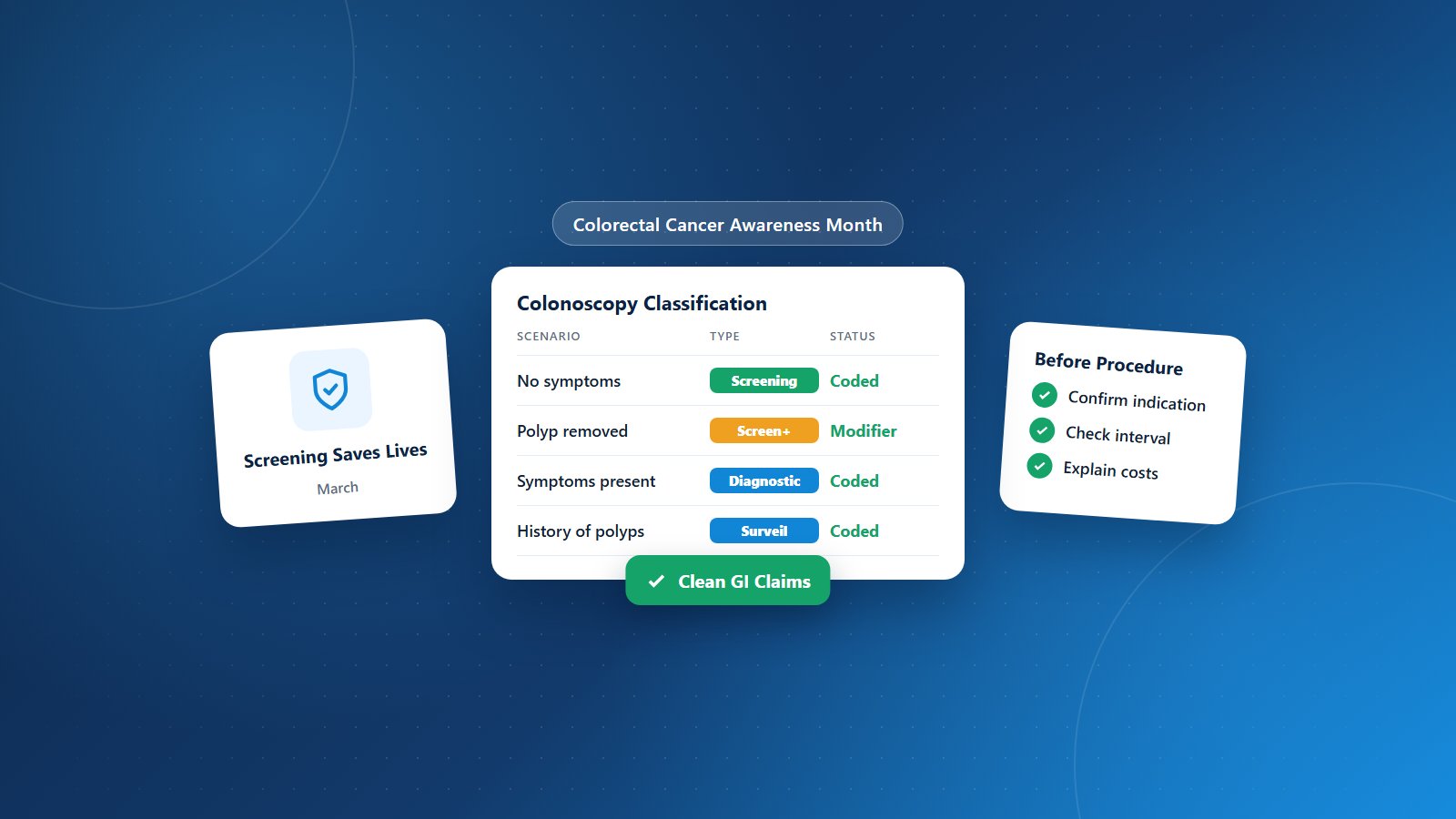
March is Colorectal Cancer Awareness Month, a time to encourage screening that can prevent cancer or catch it early. Gastroenterology practices perform many of these screenings, along with diagnostic procedures, office visits and treatment of digestive diseases. GI billing has a particular challenge: a procedure that starts as a screening can become diagnostic or therapeutic during the same session, and that change affects coding, coverage and what the patient owes.
Here are coding tips that keep gastroenterology claims clean.
Screening vs. Diagnostic vs. Surveillance
- Screening: Performed on patients without symptoms to detect cancer or precancerous polyps.
- Diagnostic: Performed to evaluate symptoms such as bleeding, pain, anemia or changes in bowel habits.
- Surveillance: Performed at intervals for patients with a personal history of polyps, cancer or certain conditions.
Each category can be covered differently, and payers have their own rules for patient cost sharing. Correctly identifying the purpose of the procedure is the first step to accurate billing.
Tip 1: Confirm the Indication Before the Procedure
Review the patient’s history and reason for the procedure during scheduling and pre-procedure intake. A patient scheduled for “screening” may have symptoms or a history that makes the procedure diagnostic or surveillance.
Tip 2: Handle Screening-to-Therapeutic Conversions Correctly
When a polyp is found and removed during a screening procedure, the service may be coded differently, and payers often require specific modifiers to indicate that the procedure began as a screening. Using the correct modifiers can affect whether the patient is charged cost sharing. Follow each payer’s current guidance.
Tip 3: Sequence Diagnosis Codes Correctly
When a screening procedure finds a polyp or other condition, payers often expect the screening diagnosis to be listed first, followed by the finding. Incorrect sequencing can cause the claim to process as diagnostic.
Tip 4: Document Technique for Each Lesion
Polyp removal techniques, such as snare, biopsy forceps or ablation, are coded differently. Document the technique, location and number of lesions for accurate coding.
Tip 5: Know Anesthesia and Facility Implications
Screening status may also affect anesthesia and facility claims. Communicate procedure classification clearly to anesthesia providers and facilities so all claims align.
Tip 6: Track Screening Intervals
Screening and surveillance coverage is often tied to specific intervals and risk levels. Verify coverage and history before scheduling.
Tip 7: Educate Patients About Costs
Patients scheduled for screening often expect no cost. Explain in advance that if polyps are removed or biopsies taken, cost sharing may apply depending on their plan. Clear communication prevents complaints and unpaid balances.
Tip 8: Verify Authorization for Diagnostic Procedures
Some plans require prior authorization for diagnostic endoscopy or related services. Check requirements before scheduling.
Tip 9: Audit GI Claims Regularly
Modifier usage, diagnosis sequencing and lesion documentation are common audit findings in GI. Periodic billing audits help keep claims clean.
GI Billing Support From PRCM
Physicians Revenue Cycle Management supports gastroenterology practices with coders experienced in screening, surveillance and therapeutic procedures. Our medical billing services help GI practices bill accurately and protect patients from surprise costs. Explore the specialties we serve.
This Colorectal Cancer Awareness Month, support screening with accurate billing. Let’s connect.