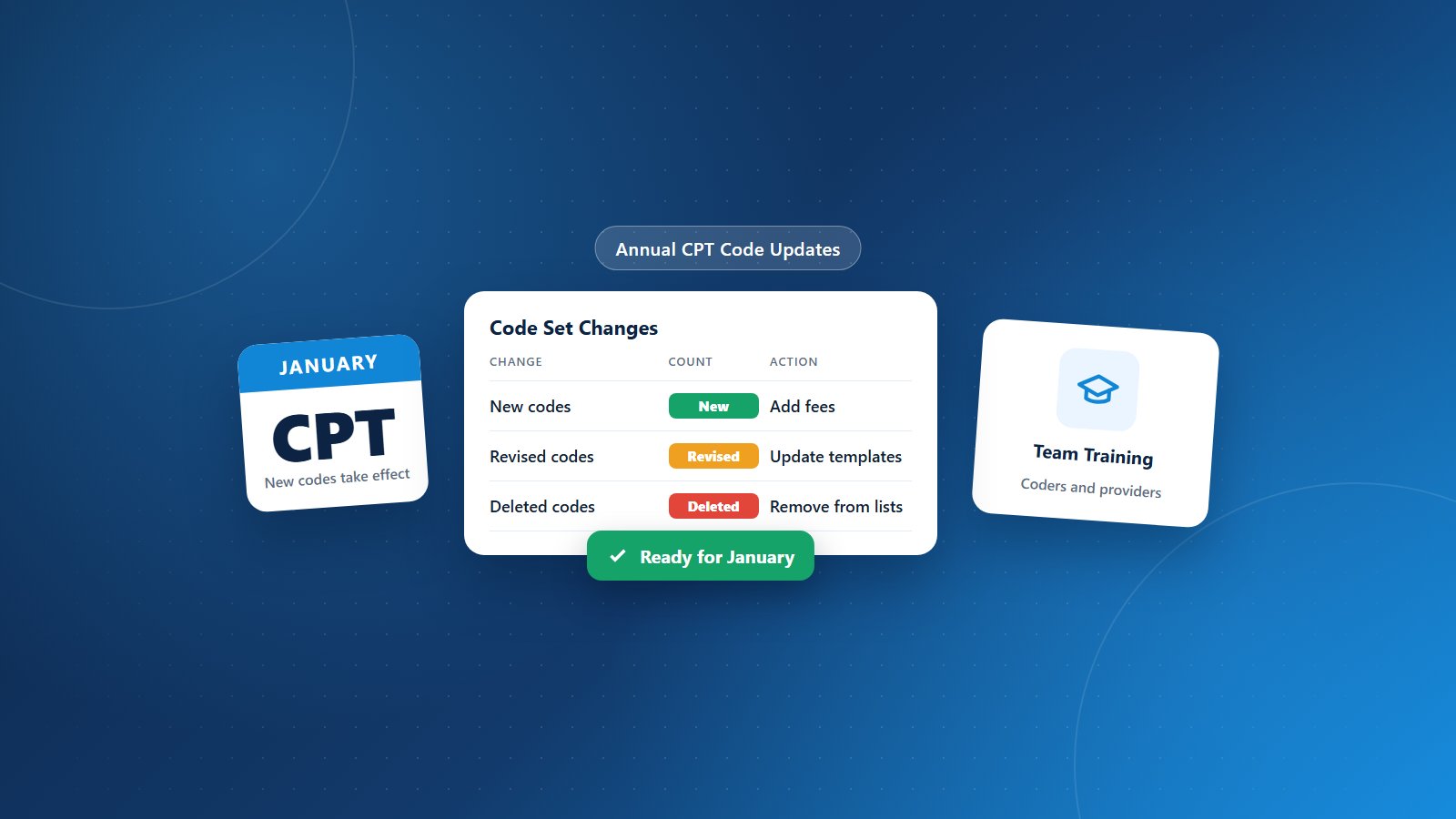
Every January, the CPT code set is updated. New codes are added, existing codes are revised or deleted, and guidelines are clarified. These changes take effect for services on or after the effective date, which means your coding team, systems and providers need to be ready before the new year begins.
Here’s how to prepare your coding team for annual CPT updates.
Why CPT Updates Matter
- Deleted codes cause rejections: Claims with deleted codes won’t be accepted for services after the effective date.
- Revised descriptors change meaning: A code you’ve used for years may now describe something different.
- New codes create opportunities: New codes may allow you to bill for services that previously weren’t separately reportable.
- Guideline changes affect documentation: Updates may change what providers need to document.
Step 1: Review the Changes Early
Code changes are typically released well ahead of the effective date. Have coders review additions, deletions and revisions relevant to your specialty as soon as possible.
Step 2: Analyze Your Practice’s Code Usage
Run a report of the CPT codes your practice billed most frequently over the past year. Compare it with the list of changes to identify which updates affect your highest-volume and highest-revenue services.
Step 3: Update Systems Before January
- Confirm your EHR and practice management system vendors will load new code sets.
- Update charge masters and fee schedules for new codes.
- Revise superbills, order sets and favorites lists.
- Update claim scrubber rules.
- Remove deleted codes from templates and pick lists.
Step 4: Set Fees for New Codes
New codes need fees in your charge master. Review payer fee schedules as they become available and make sure your charges are set appropriately.
Step 5: Educate Providers
Providers don’t need every detail, just what affects their documentation and code selection. Create short specialty-specific summaries highlighting changes to common services.
Step 6: Train Coders and Billers in Depth
Coders and billers need detailed training on new codes, revised guidelines and payer-specific implementation. Encourage continuing education and certification maintenance.
Step 7: Watch Payer Implementation
Payers don’t always implement new codes the same way or at the same pace. Some may not cover new codes immediately or may require specific modifiers. Monitor payer bulletins and early claim responses.
Step 8: Handle the Transition Carefully
Claims are coded based on the date of service. Services before the effective date use the prior year’s codes, even if billed in January. Make sure staff understand this for late charges and corrected claims.
Step 9: Monitor Early Claims
During the first weeks of the year, closely monitor rejections and denials related to new or revised codes so you can fix issues before they multiply.
Step 10: Audit After Implementation
A focused coding audit in the first quarter confirms that new codes are being applied correctly and documentation supports them.
Coding Expertise From PRCM
Physicians Revenue Cycle Management’s certified coders track annual code changes across specialties and update workflows before the new year begins. Our medical billing services help practices transition smoothly and avoid January denials. Read our related guide on annual ICD-10 updates.
Is your coding team ready for January? Let’s connect.