Telehealth has become a permanent part of how many practices deliver care. Follow-up visits, behavioral health sessions, medication management and chronic care check-ins often happen by video or phone. But telehealth billing has its own rules, and they vary by payer. Claims with the wrong place of service, a missing modifier or incomplete documentation can be denied or paid incorrectly.
Here are the telehealth billing essentials every practice should master.
1. Confirm the Service Is Covered via Telehealth
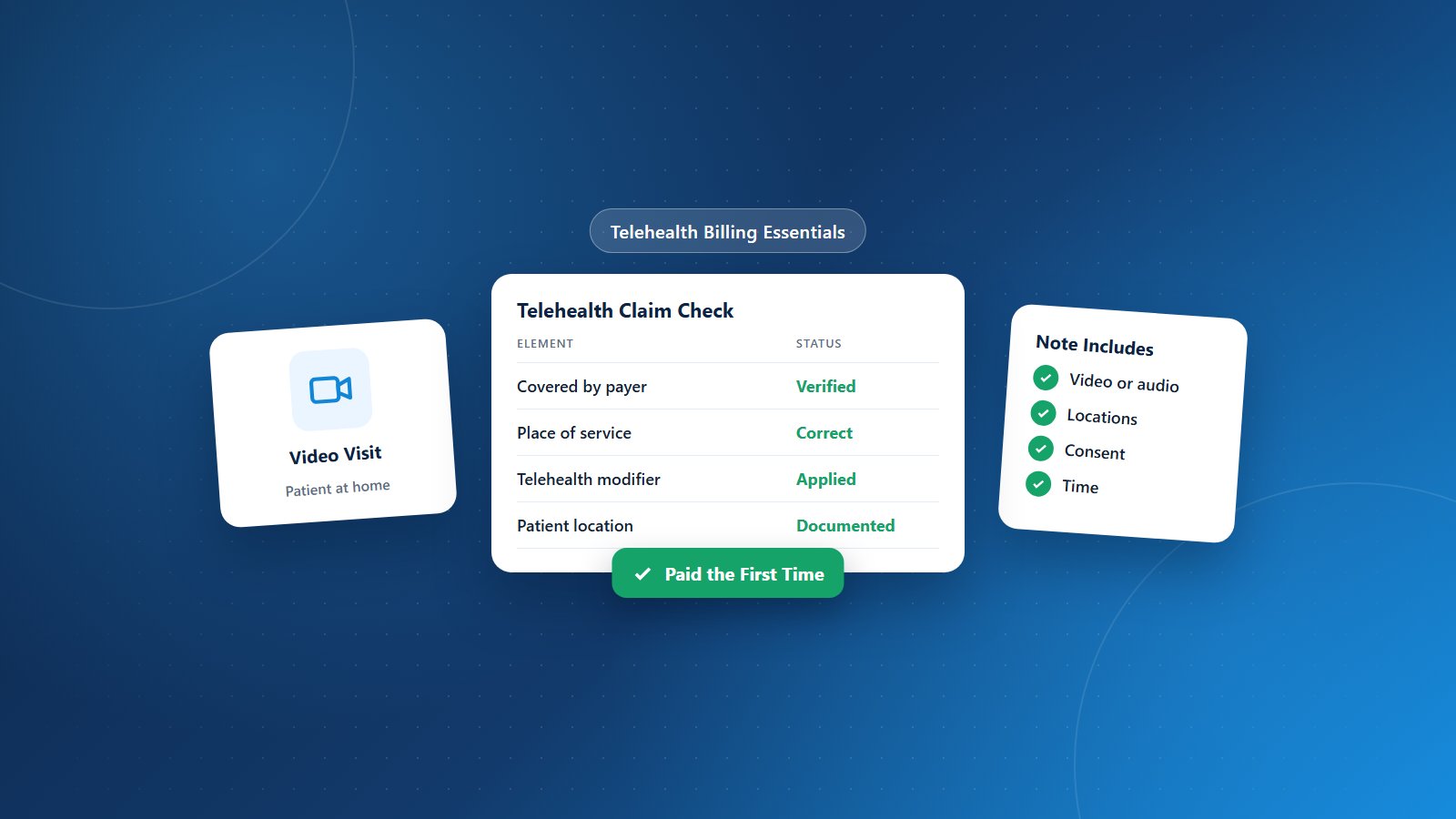
Not every service is covered when delivered virtually, and coverage differs between Medicare, Medicaid and commercial plans. Maintain a payer reference listing which services are covered by telehealth, whether audio-only visits are allowed and any patient location requirements.
2. Use the Correct Place of Service
Place of service (POS) codes tell the payer where the patient was during the visit. Telehealth often uses specific POS codes to indicate whether the patient was at home or another location. Some payers instead ask you to report the POS that would have applied had the visit been in person. Follow each payer’s current instructions.
3. Apply Required Modifiers
Many payers require modifiers to identify telehealth services, such as modifiers indicating synchronous audio-video or audio-only communication. Requirements differ by payer and change over time, so build payer-specific modifier rules into your billing system.
4. Document Telehealth-Specific Details
In addition to standard visit documentation, telehealth notes should include:
- That the visit was conducted via telehealth and the technology used (video or audio-only).
- Patient location and provider location.
- Patient consent to telehealth, when required.
- Participants in the visit.
- Time, when billing is time-based.
5. Verify Provider Licensure and Enrollment
Providers generally must be licensed in the state where the patient is located and enrolled with the patient’s payer. Learn more in our guide to telehealth credentialing across states.
6. Collect Patient Responsibility
Telehealth visits may carry copays or cost sharing like in-person visits. Collect payment before or during the virtual visit using card-on-file or online payment links.
7. Know the Difference Between Visit Types
Full telehealth visits differ from brief virtual check-ins, e-visits through patient portals and remote monitoring services. Each has different codes and requirements. Make sure providers and billers understand which service applies.
8. Watch for Policy Changes
Telehealth policies have changed frequently, and both government and commercial payers continue to update rules. Assign someone to monitor payer bulletins and update your reference guide promptly.
9. Monitor Telehealth Denials Separately
Track denials for telehealth claims separately from in-person claims. Patterns, such as a single payer rejecting a specific modifier, can be fixed quickly once identified.
10. Audit Telehealth Documentation
Periodic audits confirm that telehealth visits are documented and coded correctly, reducing compliance risk.
Telehealth Billing Support From PRCM
Physicians Revenue Cycle Management helps practices bill telehealth accurately across payers, with up-to-date payer rules, credentialing support and denial management. Our medical billing services make virtual care financially sustainable.
Want telehealth claims paid the first time? Let’s connect.