October is Breast Cancer Awareness Month, a reminder of the importance of early detection through regular screening. Radiology and imaging practices perform a high volume of breast imaging during this month and throughout the year. One of the most common sources of billing errors, and patient frustration, is the difference between screening and diagnostic imaging.
Screening and diagnostic mammograms are coded, covered and billed differently. Here’s how to get it right.
Screening vs. Diagnostic: What’s the Difference?
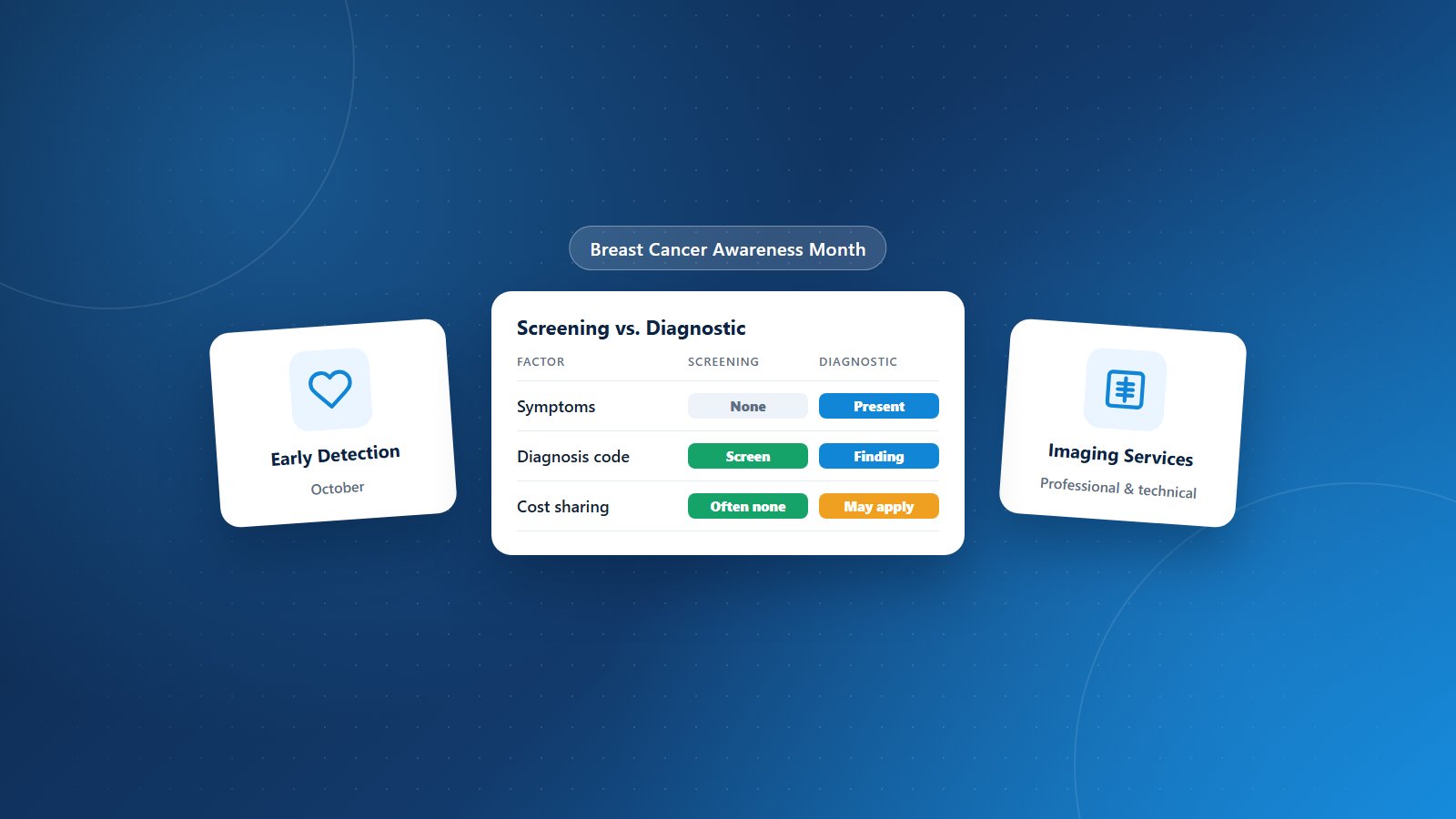
Screening mammograms are performed on patients without signs or symptoms of breast disease, as part of routine preventive care.
Diagnostic mammograms are performed to evaluate a specific problem, such as a lump, pain, nipple discharge, an abnormal finding on a prior screening, or for follow-up of a known condition.
The distinction matters because preventive screening is often covered without patient cost sharing, while diagnostic imaging may be subject to deductibles, copays or coinsurance.
Common Billing Challenges
1. Incorrect exam type on the order
If the order says “screening” but the patient has symptoms, or the order says “diagnostic” for a routine screening, the claim may be coded incorrectly. Staff should verify the reason for the exam at scheduling and check-in.
2. Screening converted to diagnostic on the same day
When a screening reveals a finding and the radiologist performs additional diagnostic imaging during the same visit, both services may be billable with appropriate documentation and payer-specific modifiers or rules. Billing incorrectly can result in denials or incorrect patient charges.
3. Diagnosis coding
Screening claims use encounter-for-screening diagnosis codes. Diagnostic claims require codes describing the sign, symptom or finding. Mismatched diagnosis and procedure codes lead to denials.
4. Additional imaging and add-on services
Services such as computer-aided detection, tomosynthesis, ultrasound and follow-up imaging must be coded according to current guidelines and payer policies.
5. Frequency limitations
Screening mammograms may be covered at specific intervals. Services performed sooner may not be covered as screening.
Protecting Patients From Billing Surprises
Patients often expect all mammograms to be free. When a screening becomes diagnostic, they may receive an unexpected bill. Practices can reduce confusion by:
- Explaining at scheduling that additional imaging, if needed, may have cost sharing.
- Verifying benefits for both screening and diagnostic services.
- Training front-desk staff to answer questions about coverage differences.
Professional and Technical Components
Imaging services often have a professional component (the radiologist’s interpretation) and a technical component (equipment and staff). Make sure billing reflects which components your practice provides for each site of service.
Best Practices for Breast Imaging Billing
- Confirm exam type and reason at scheduling.
- Use templates that clearly document indication and findings.
- Apply payer-specific rules for same-day screening and diagnostic services.
- Track screening intervals.
- Audit breast imaging claims periodically through a billing audit.
Radiology Billing Support From PRCM
Physicians Revenue Cycle Management supports radiology and imaging practices with coders experienced in screening and diagnostic imaging, component billing and payer policies. Our medical billing services help imaging providers bill accurately and protect patients from surprises. See the specialties we serve.
This Breast Cancer Awareness Month, support early detection with accurate billing. Let’s connect.