October is Cybersecurity Awareness Month, and healthcare has more reason than most industries to pay attention. Medical practices hold valuable patient data, often run lean IT operations and depend heavily on electronic systems. That combination makes small practices attractive targets for cybercriminals. A single phishing email or unpatched system can lead to a data breach, ransomware attack or weeks of disruption.
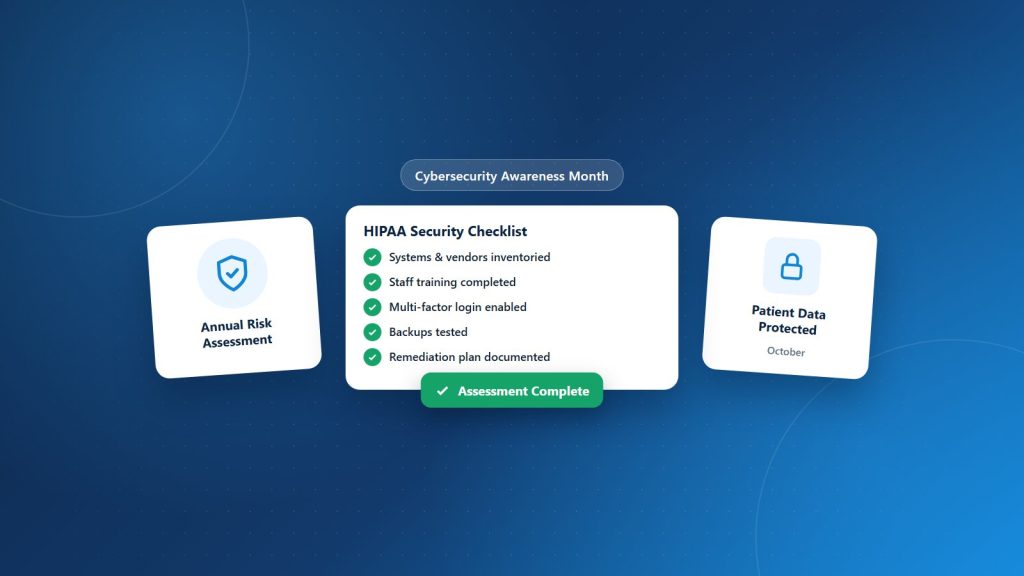
The foundation of protecting your practice is a HIPAA security risk assessment. Here’s what it is and how to conduct one.
What Is a HIPAA Security Risk Assessment?
The HIPAA Security Rule requires covered entities, including physician practices, to conduct an accurate and thorough assessment of potential risks and vulnerabilities to the confidentiality, integrity and availability of electronic protected health information (ePHI). In plain terms, you need to know where your patient data lives, what could go wrong and what you’re doing about it.
A risk assessment isn’t a one-time project. It should be reviewed regularly and updated when your practice changes systems, locations or workflows.
Why It Matters
- It’s required: A risk assessment is a core HIPAA obligation and is often requested during investigations.
- It reduces risk: Identifying vulnerabilities lets you fix them before attackers exploit them.
- It supports other programs: Security risk analysis is also part of certain quality program requirements.
Step 1: Inventory Where ePHI Lives
List every system, device and vendor that creates, receives, stores or transmits patient information: EHR, practice management system, billing software, email, laptops, mobile devices, backup systems, patient portals, fax services and third-party vendors.
Step 2: Identify Threats and Vulnerabilities
Consider risks such as:
- Phishing and social engineering.
- Ransomware and malware.
- Weak or shared passwords.
- Unpatched software and outdated operating systems.
- Lost or stolen laptops and phones.
- Unauthorized access by employees.
- Vendor breaches.
- Natural disasters and power failures.
Step 3: Evaluate Current Safeguards
Review administrative, physical and technical safeguards already in place, including policies, training, access controls, encryption, firewalls, antivirus, backups and facility security.
Step 4: Determine Likelihood and Impact
For each risk, assess how likely it is to occur and how severe the impact would be. This helps you prioritize the most important fixes.
Step 5: Create a Remediation Plan
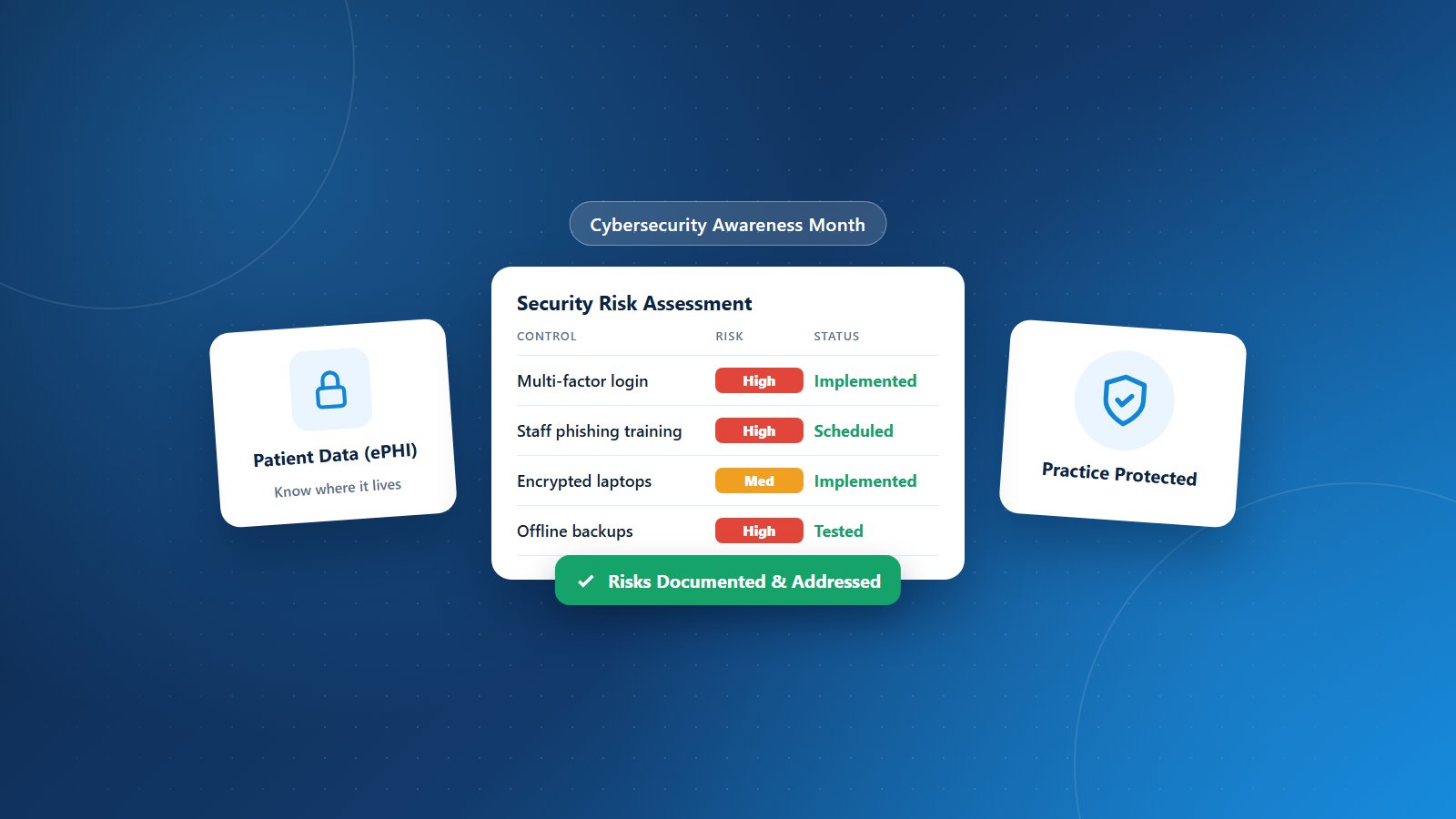
Document the actions you’ll take, who is responsible and target completion dates. Common improvements include:
- Multi-factor authentication for email, EHR and remote access.
- Regular security awareness and phishing training.
- Encryption for laptops and mobile devices.
- Automatic software updates and patching.
- Tested, offline or immutable backups.
- Role-based access and prompt removal of former employees’ accounts.
- Business associate agreements with all vendors handling ePHI.
Step 6: Document Everything
Keep records of your assessment, findings, decisions and remediation progress. Documentation demonstrates good faith compliance efforts.
Step 7: Review and Update Regularly
Revisit the assessment at least annually and whenever you adopt new technology, change vendors, open new locations or experience a security incident.
Your Billing Partner Is Part of Your Security
Billing companies handle large volumes of patient data. Make sure your billing partner follows strong security practices, signs a business associate agreement and communicates promptly about incidents. Ask any vendor that touches patient data how they protect it, how often they assess their own risks and how they would notify you of a breach.
Secure, Compliant Support From PRCM
Physicians Revenue Cycle Management takes HIPAA compliance and data security seriously across all of our billing and practice management services. We help practices protect patient data while keeping revenue flowing.
This Cybersecurity Awareness Month, make security a priority. Let’s connect.