Flu season keeps every practice busy. Primary care, pediatrics, internal medicine and many specialty practices administer large numbers of vaccines in a short period. It’s an important service for patient health and a meaningful revenue opportunity, but only when vaccine billing is accurate. High volumes magnify small errors, and vaccine claims are frequently denied for preventable reasons.
Follow these flu vaccine billing best practices to capture every dollar correctly.
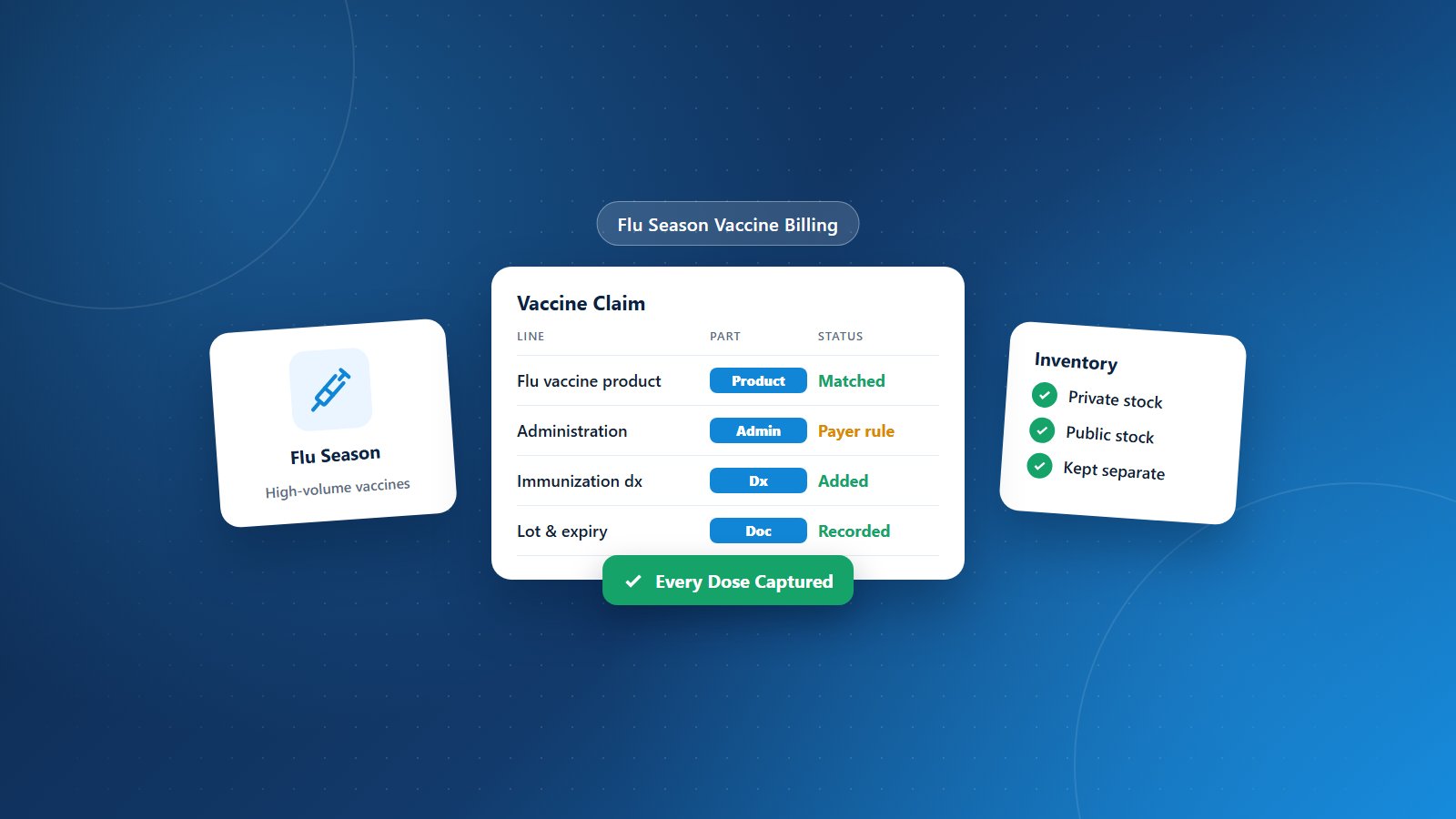
Understand the Two Parts of Every Vaccine Claim
Vaccine claims typically include:
- The vaccine product: A code identifying the specific vaccine, formulation and dosage.
- The administration: A code for administering the vaccine.
Both must be billed correctly. Missing the administration code leaves revenue uncollected; mismatched product codes cause denials.
1. Match Product Codes to Inventory
Different flu vaccines have different codes based on formulation, age indication and dose. Make sure charge entry reflects exactly what was administered by linking codes to the lot and product in your inventory system.
2. Know Payer-Specific Administration Codes
Some payers, including Medicare, use their own administration codes for certain vaccines rather than the standard administration codes. Build payer-specific rules into your billing system so the correct code is applied automatically.
3. Use the Right Diagnosis Code
Vaccine claims require an appropriate encounter-for-immunization diagnosis code. Missing or incorrect diagnosis codes are a common cause of denials.
4. Bill Vaccines With Other Services Correctly
When a vaccine is given during a visit where a separate problem is addressed, the E/M service may be billable separately with appropriate documentation and modifier use. Vaccine-only visits generally don’t support a separate E/M service.
5. Separate Public and Private Inventory
Vaccines supplied through public programs must not be billed to payers as purchased product; typically only administration is billed. Keep public and privately purchased stock physically and electronically separate.
6. Verify Coverage and Network
Most plans cover flu vaccines as preventive services, but some plans direct members to pharmacies or require in-network providers. Verify coverage, especially for new patients and plans you don’t see often.
7. Document Every Administration
Record the vaccine name, manufacturer, lot number, expiration date, dose, route, site, administering staff member, date and vaccine information statement provided. Complete documentation supports billing and patient safety.
8. Plan Mass Vaccination Events
Flu clinics and drive-through events require efficient registration, eligibility checks and charge capture. Use pre-registration and batch eligibility verification to keep lines moving and claims clean.
9. Bill Promptly and Track Denials
Submit vaccine claims quickly while volumes are high, and track denials daily during peak season. A small coding error repeated across hundreds of claims can create a large backlog.
10. Review Profitability
Compare vaccine acquisition costs with payer reimbursement for each product and payer. This helps with purchasing decisions for future seasons.
Vaccine Billing Support From PRCM
Physicians Revenue Cycle Management helps practices manage high-volume seasonal billing with accurate charge capture, payer-specific coding and rapid denial follow-up. Our medical billing services keep claims moving during your busiest weeks. Pediatric practices can also read our back-to-school pediatric billing guide.
Ready for flu season? Let’s connect.