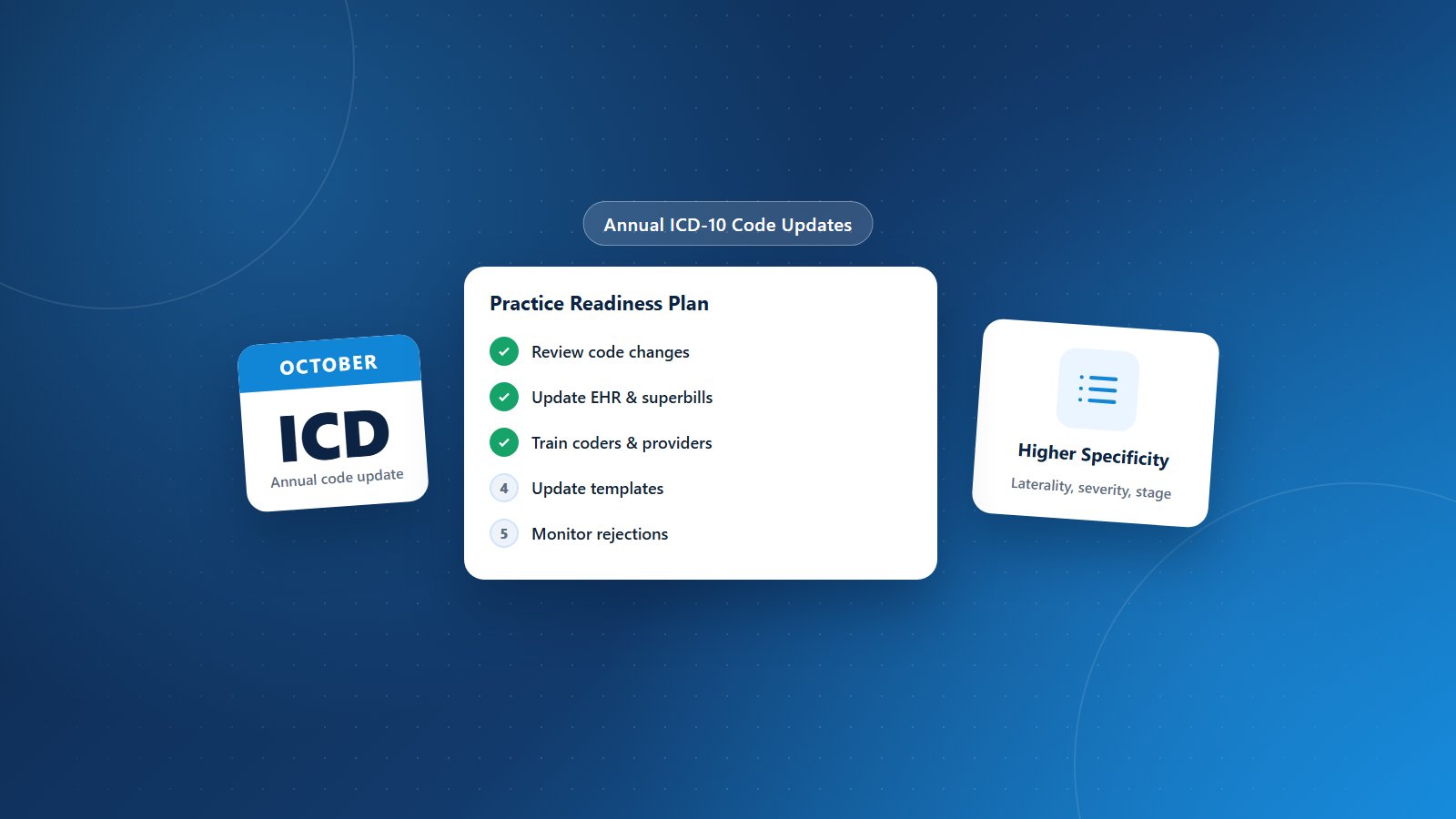
ICD-10-CM diagnosis codes are updated every year. New codes are added, existing codes are revised or deleted and guidelines are clarified. When practices aren’t ready, claims with outdated or invalid diagnosis codes get rejected, and documentation may not support the new level of specificity payers expect.
Use this practice readiness checklist to prepare your team, systems and workflows for annual ICD-10 code updates.
Why Annual Updates Matter
- Invalid codes are rejected: Claims using deleted or incomplete codes after the effective date won’t be accepted.
- Specificity affects payment: New codes often add detail that supports medical necessity and accurate risk adjustment.
- Coverage policies change: Payers update policies to reference new codes.
- Quality reporting depends on codes: Measures often rely on specific diagnoses.
Step 1: Review What’s Changing
Each year, review the new, revised and deleted codes, along with updated official guidelines. Focus first on codes relevant to your specialty and most common diagnoses.
Step 2: Identify High-Impact Codes for Your Practice
Run a report of your most frequently used diagnosis codes and compare it with the list of changes. Prioritize training and system updates for the codes that affect the most claims.
Step 3: Update Your Systems
- Confirm your EHR and practice management system vendors will load updated code sets before the effective date.
- Update favorite lists, order sets and problem list shortcuts.
- Update superbills, charge tickets and any paper forms.
- Review claim scrubber edits for the new codes.
Step 4: Train Providers and Coders
Coders need detailed training on changes and guidelines. Providers need focused education on documentation elements required for new codes, such as laterality, severity, cause or stage. Short specialty-specific tip sheets are often more effective than long presentations.
Step 5: Review Documentation Templates
If new codes require additional detail, make sure EHR templates prompt providers to capture it. Templates that don’t support specificity lead to unspecified codes and potential denials.
Step 6: Watch Dates of Service
Code sets apply based on the date of service. Claims for services before the effective date use the prior year’s codes; services on or after use the new codes. Make sure staff understand this, especially for claims held or resubmitted around the transition.
Step 7: Check Payer Policies
After updates take effect, review payer coverage policies that reference diagnosis codes, particularly for high-volume tests and procedures.
Step 8: Monitor Rejections and Denials
In the weeks after updates, closely monitor clearinghouse rejections and denials related to diagnosis codes. Early detection prevents a backlog.
Step 9: Audit After the Transition
A focused coding audit after the transition confirms that providers and coders are applying new codes correctly and documentation supports them.
Specificity Is a Year-Round Goal
Annual updates are a reminder that diagnosis coding accuracy matters every day. Specific diagnosis coding supports medical necessity, accurate risk adjustment, quality reporting and cleaner claims.
Coding Support From PRCM
Physicians Revenue Cycle Management’s certified coders stay current with annual code changes and guidelines. Through our medical billing and audit services, we help practices transition smoothly and code accurately all year.
Is your practice ready for the next code update? Let’s connect.