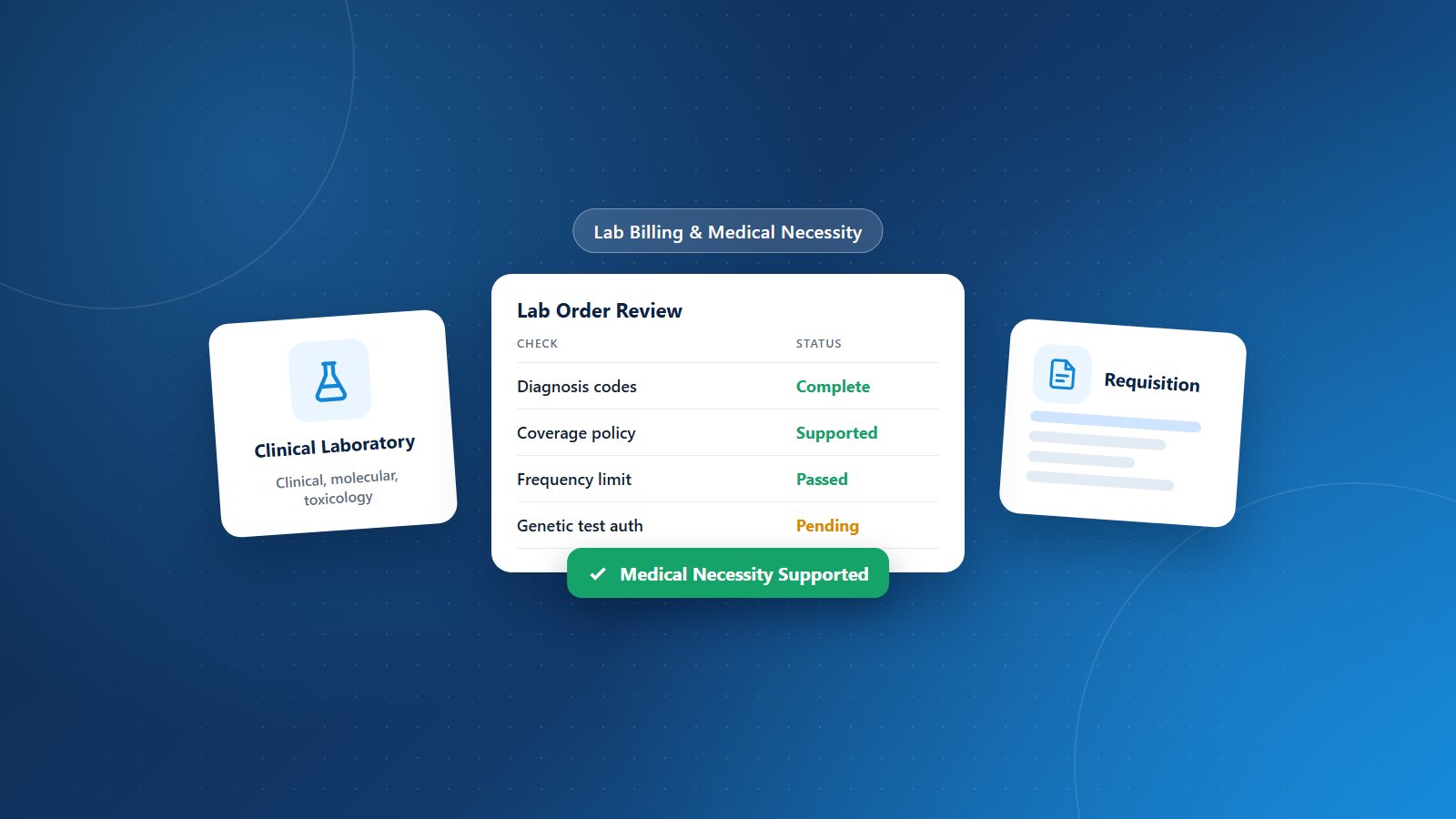
Clinical, molecular and toxicology laboratories face some of the highest denial rates in healthcare. Labs often don’t see patients directly, depend on ordering providers for diagnosis information and process high volumes of claims with relatively small individual payments. When claims are denied for medical necessity, a lab may have little documentation of its own to support an appeal.
Here’s how labs can strengthen documentation, improve order quality and prevent costly medical necessity denials.
Why Lab Claims Are Denied for Medical Necessity
- Diagnosis codes on the order don’t support coverage for the test under payer policy.
- Orders are incomplete, missing diagnoses or signatures.
- Tests exceed frequency limits.
- Panels or bundled tests are billed incorrectly.
- Molecular and genetic tests lack required prior authorization or clinical documentation.
1. Improve Order Quality at the Source
Lab billing begins with the requisition. Work with ordering providers to make sure every order includes:
- Complete patient demographics and insurance information.
- Specific diagnosis codes that reflect the reason for testing.
- Clear test selection.
- Ordering provider identification and signature, as required.
Electronic ordering interfaces with built-in prompts can significantly reduce incomplete orders.
2. Check Coverage Policies Before Testing
Many payers publish coverage policies listing diagnoses that support coverage for specific tests. Build these rules into order entry or pre-billing review so staff can identify likely denials before the test is performed or billed.
3. Use Advance Beneficiary Notices When Appropriate
For patients with traditional Medicare, when a test may not be covered as medically necessary, an Advance Beneficiary Notice (ABN) informs the patient they may be responsible for payment. Properly executed notices allow the lab to bill the patient if Medicare denies the claim. Commercial payers may have their own waiver processes.
4. Track Frequency Limits
Some tests are covered only a certain number of times within a period. Track test history and flag repeats before billing.
5. Code Panels and Bundled Tests Correctly
When all components of a defined panel are performed, the panel code should generally be billed rather than individual tests. Partial panels and unbundling create edits and denials.
6. Obtain Authorization for Molecular and Genetic Tests
Many molecular and genetic tests require prior authorization and specific clinical documentation such as family history or prior results. Verify requirements and collect documentation from the ordering provider before running the test whenever possible.
7. Request Documentation for Appeals
When a claim is denied, request supporting medical records from the ordering provider promptly. Establish relationships and agreements with ordering practices so documentation requests are answered quickly.
8. Monitor Denials by Test and Ordering Provider
Analyze denials by test type, payer and ordering provider. Patterns often point to a specific client practice or test that needs education or workflow changes.
9. Stay Compliant
Lab billing is closely monitored. Avoid practices such as encouraging providers to order unnecessary tests or routinely waiving patient cost sharing without appropriate policies. Regular billing audits help keep lab billing compliant.
Lab Billing Support From PRCM
Physicians Revenue Cycle Management supports clinical, pathology, toxicology and molecular laboratories with order review, coding, denial management and appeals. Our medical billing services help labs reduce medical necessity denials and improve collections. Explore the specialties we serve.
Are medical necessity denials hurting your lab’s revenue? Let’s connect.