Wound care is a growing and essential specialty. Chronic wounds such as diabetic foot ulcers, pressure injuries and venous leg ulcers affect many patients and require ongoing, specialized treatment. But wound care billing is also one of the most scrutinized areas in healthcare. Payers frequently deny or review wound care claims, and the most common reason is documentation that doesn’t fully support the services billed.
Here are practical documentation tips that help wound care providers prevent denials and get paid.
Why Wound Care Claims Get Denied
- Missing wound measurements or descriptions.
- Debridement documentation that doesn’t specify depth or tissue removed.
- Lack of evidence that the wound is improving, or why the plan is changing if it isn’t.
- Advanced therapies billed without documentation of failed standard care.
- Frequency of services exceeding payer coverage policies.
- Diagnosis codes lacking specificity about wound type, location and severity.
Tip 1: Measure and Describe Every Wound at Every Visit
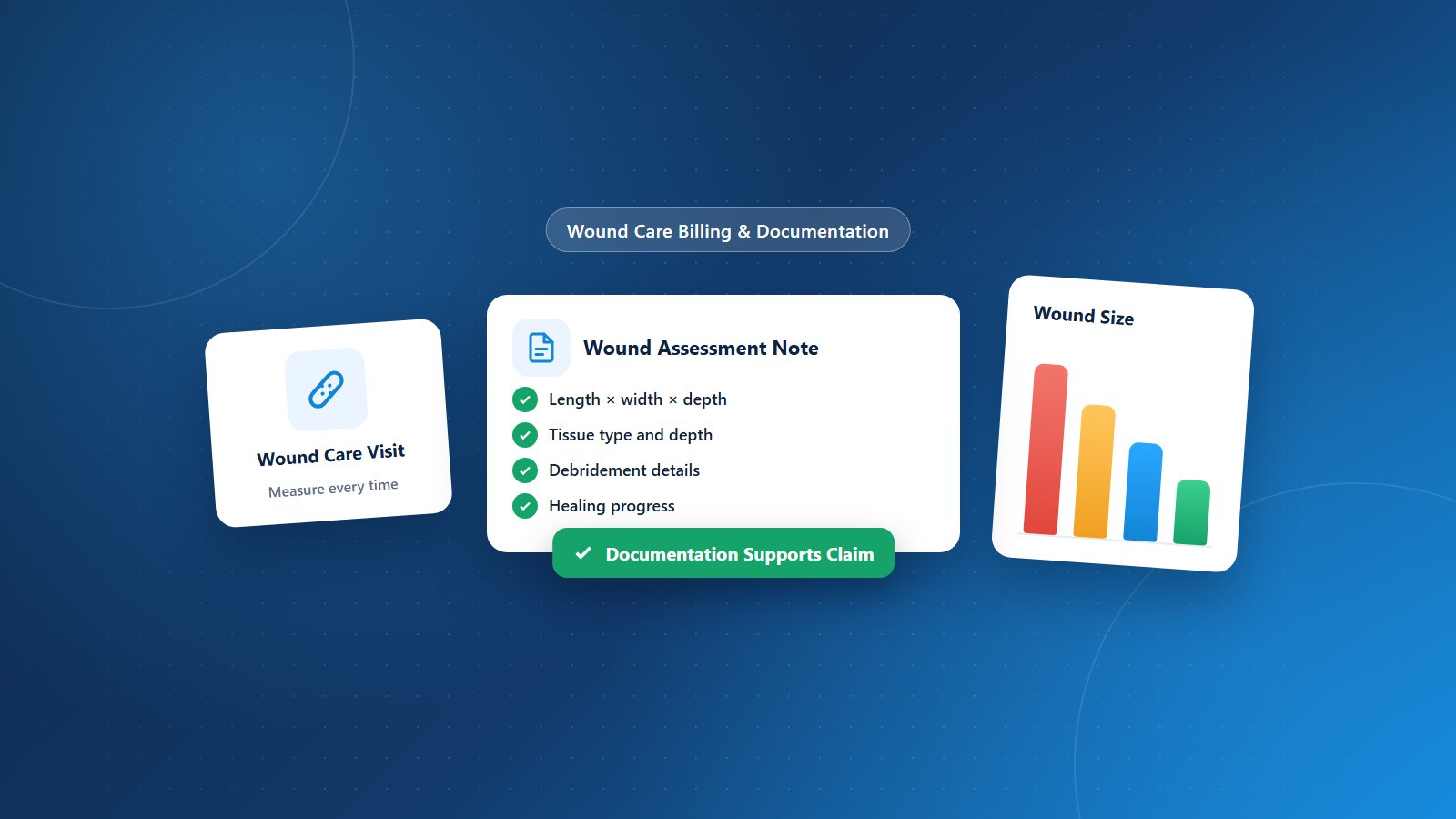
Document length, width and depth, along with location, wound type, tissue type, drainage, odor, wound edges and surrounding skin. Consistent measurements show progress and support ongoing treatment.
Tip 2: Document Debridement Precisely
Debridement coding depends on the depth of tissue removed and the surface area. Notes should clearly state the type of debridement, the deepest level of tissue removed, the instruments used, the total surface area and pre- and post-procedure measurements.
Tip 3: Show Medical Necessity and Progress
Payers want to see that treatment is working or that the plan is being adjusted. Document wound status changes over time, and if healing stalls, explain the reasons and the updated plan.
Tip 4: Document Standard Care Before Advanced Therapies
Many payers require documentation that conventional wound care was tried for a period of time before covering advanced treatments such as skin substitutes or other specialized therapies. Record offloading, compression, infection control and other standard measures.
Tip 5: Address Underlying Conditions
Document management of contributing factors such as diabetes control, nutrition, vascular status and pressure relief. This demonstrates comprehensive care and supports medical necessity.
Tip 6: Code Diagnoses With Full Specificity
Wound diagnosis codes often require details about wound type, site, laterality and severity. Make sure documentation includes these details so coders can select the most accurate codes.
Tip 7: Follow Payer Coverage Policies
Review payer policies on frequency limits, covered products and documentation requirements, and build them into templates and workflows.
Tip 8: Use Photos When Appropriate
Wound photographs, taken consistently and stored in the medical record, can strengthen documentation of wound status and progress, in accordance with practice policies and patient consent.
Tip 9: Audit Wound Care Claims
Because wound care faces heavy scrutiny, regular internal or external billing audits help catch documentation gaps before payers do.
Wound Care Billing Support From PRCM
Physicians Revenue Cycle Management supports wound care practices with coders who understand debridement, advanced therapies and payer coverage policies. Our medical billing services help wound care providers reduce denials and protect revenue. Explore the specialties we serve.
Want stronger wound care documentation and fewer denials? Let’s connect.