A medical practice’s revenue cycle depends on people, systems and vendors working together every day. When one piece breaks, whether a key biller resigns, a server fails, a vendor suffers a cyberattack or severe weather closes the office, billing can grind to a halt. Without a plan, practices scramble, claims age and cash flow suffers.
A business continuity plan for your billing operations prepares your practice to keep revenue flowing through disruptions of any kind. Here’s how to build one.
What Is a Billing Continuity Plan?
A business continuity plan documents how your practice will maintain critical operations during and after a disruption. For billing, that means continuing to verify eligibility, capture charges, submit claims, post payments, follow up on A/R and communicate with patients, even when normal systems or staff aren’t available.
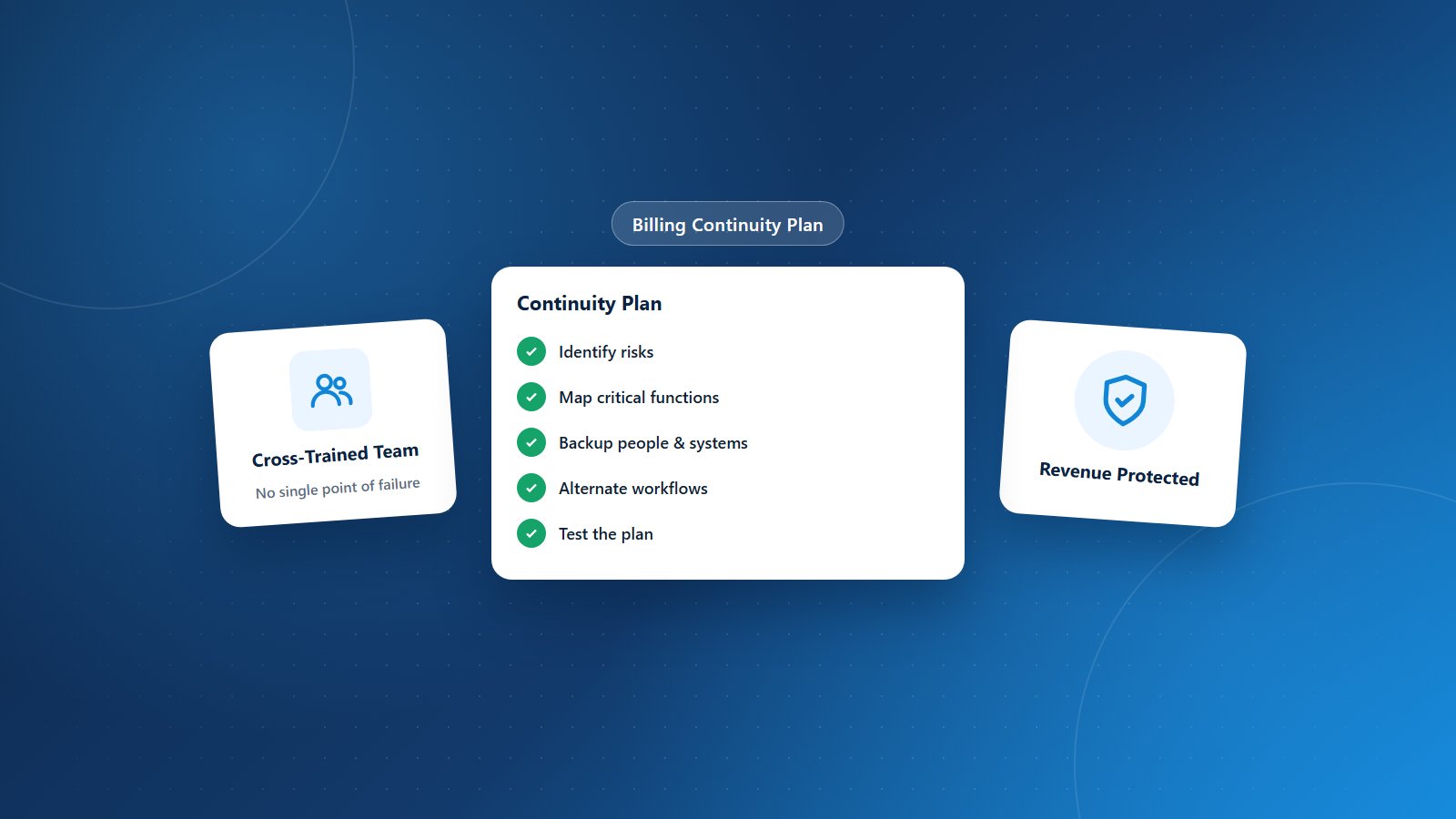
Step 1: Identify Your Risks
Start by listing the disruptions most likely to affect your billing operations:
- Staffing: Turnover, extended leave or a single person holding critical knowledge.
- Technology: EHR or practice management system outages, hardware failure, internet loss.
- Vendors: Clearinghouse, payment processor or software vendor outages.
- Cybersecurity: Ransomware, phishing or data breaches.
- Facilities: Power outages, weather events or building damage.
Step 2: Map Critical Billing Functions
List each billing function, who performs it, the systems it relies on and how long the practice can tolerate it being down. Eligibility verification and charge entry may need to resume within a day, while monthly reporting can wait longer.
Step 3: Eliminate Single Points of Failure
People
Cross-train staff so more than one person can perform each critical task. Document procedures in step-by-step guides, including payer portal logins (stored securely), workflows and escalation contacts.
Systems
Confirm your systems are backed up regularly, that backups are tested and that cloud-based systems have reliable uptime. Know how to access systems remotely if the office is unavailable.
Vendors
Identify backup vendors for critical services such as clearinghouses. Review contracts and business associate agreements for incident notification and support commitments.
Step 4: Define Alternate Workflows
For each critical function, document what staff will do if the normal process isn’t available:
- Manual eligibility checks through payer portals or phone.
- Paper superbills or downtime forms for charge capture.
- Direct payer portal submission or a backup clearinghouse for claims.
- Manual deposit tracking when electronic remittances are delayed.
Step 5: Protect Cash Flow
Maintain a cash reserve and an established line of credit so the practice can meet payroll and expenses during a revenue interruption.
Step 6: Plan Communication
Define who leads during a disruption, how staff will be notified, and how patients and payers will be informed if needed. Keep an up-to-date contact list for staff, vendors, IT support and key payer representatives.
Step 7: Test and Update the Plan
A plan only works if people know it. Review it with staff, run tabletop exercises and update it after any staffing, system or vendor change, and after any real incident.
Outsourcing as a Continuity Strategy
Many practices strengthen continuity by partnering with an outsourced billing company. A billing partner brings a team rather than a single person, established processes, multiple submission pathways and redundant systems, so a resignation or outage in your office doesn’t stop your revenue.
Build Resilient Billing With PRCM
Physicians Revenue Cycle Management helps practices create resilient billing operations through our revenue cycle management and practice management services. With experienced teams and documented workflows, we keep claims moving no matter what.
Want to stress-test your billing operations? Let’s connect.