Most practices don’t think about their clearinghouse until it stops working. A clearinghouse outage, ransomware attack on a vendor or major system failure can halt claim submissions, eligibility checks and remittances overnight. For a medical practice, that means revenue stops flowing while expenses like payroll and rent keep coming.
Healthcare has seen how disruptive these events can be. The lesson for every practice is clear: plan now to protect practice cash flow before a disruption happens.
How Clearinghouse Disruptions Affect Practices
Clearinghouses sit between your practice management system and hundreds of payers. When one goes down, practices may be unable to:
- Submit electronic claims.
- Check patient eligibility and benefits electronically.
- Receive electronic remittance advice (ERAs) and payments.
- Submit prior authorization requests through integrated tools.
Even a few weeks of disruption can create a serious cash crunch, especially for small and mid-sized practices that rely on steady weekly payments.
Immediate Steps During an Outage
1. Assess the impact
Determine which functions are affected, which payers route through the impacted vendor and how much revenue is typically processed through it each week.
2. Keep coding and charge entry current
Don’t let charges pile up uncoded. Continue documentation, coding and charge entry so claims are ready to submit as soon as an alternate path is available.
3. Use alternate submission routes
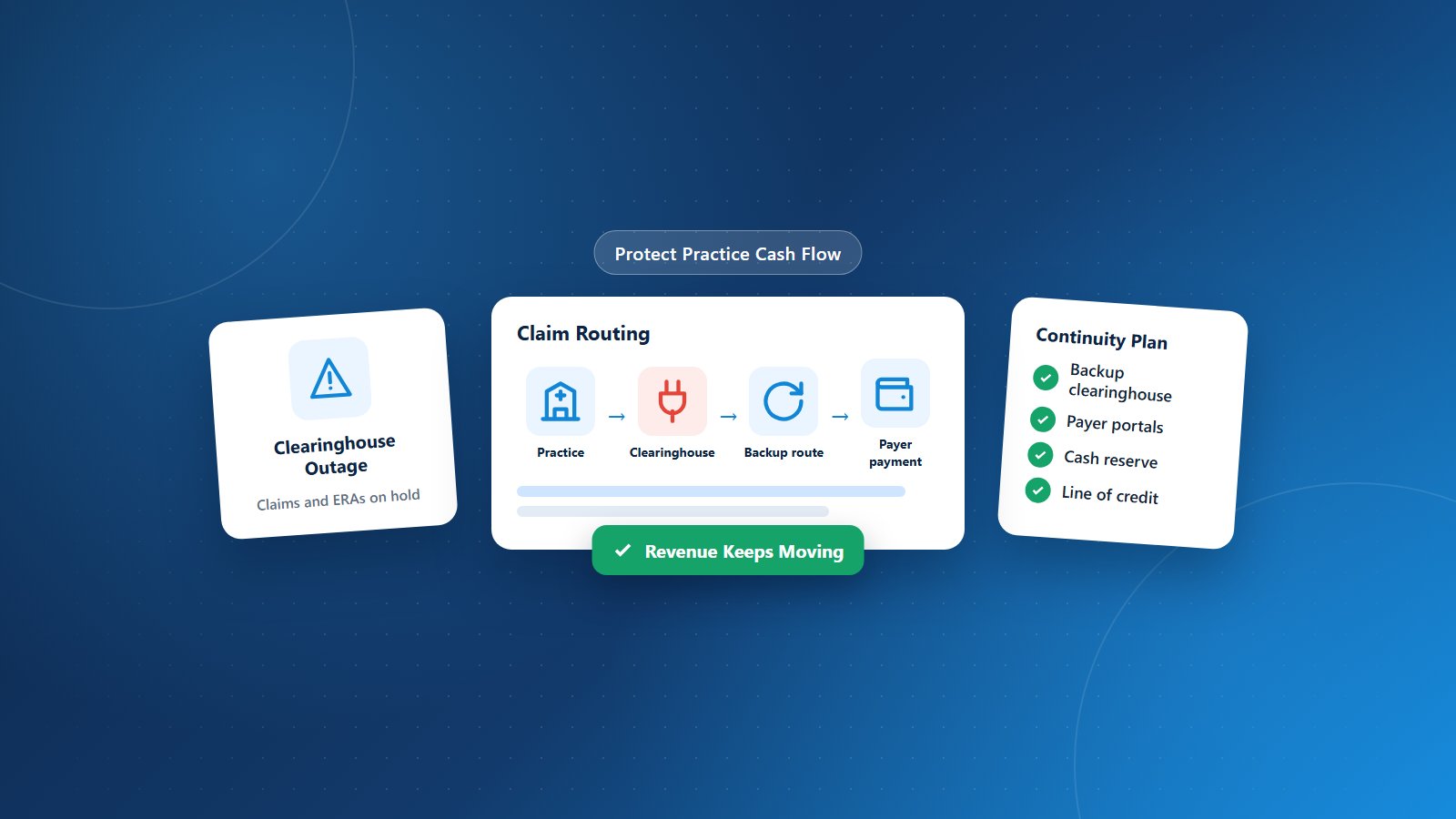
Options may include switching to a backup clearinghouse, submitting directly through payer portals or, where allowed, sending paper claims for high-value services.
4. Verify eligibility manually
Use payer portals and phone verification so front-end processes continue.
5. Track payments carefully
When ERAs aren’t available, payments may arrive without detailed remittance data. Track deposits and request remittance information from payers to post payments accurately.
6. Explore financial relief options
Talk with your bank about lines of credit, and check whether payers or industry programs offer advance payments during widespread disruptions.
Building Resilience Before the Next Disruption
- Maintain a backup clearinghouse relationship with enrollment completed for your major payers.
- Keep payer portal access active for staff who may need to submit claims or verify eligibility manually.
- Build a cash reserve that can cover several weeks of operating expenses.
- Arrange a line of credit before you need it.
- Document a continuity plan that outlines roles, alternate processes and communication steps.
- Review vendor security and business associate agreements to understand how vendors protect your data and notify you of incidents.
Communicating With Patients and Staff
During a disruption, be transparent with staff about workflow changes, and prepare front-desk teams to answer patient questions about delayed statements or eligibility checks. Clear communication reduces confusion and keeps operations steady.
After the Disruption
Once systems are restored, prioritize submitting backlogged claims within timely filing limits, reconcile all payments received during the outage and review what worked and what didn’t. Update your continuity plan based on lessons learned.
How PRCM Protects Your Revenue
Physicians Revenue Cycle Management helps practices build resilient billing operations with multiple submission pathways, payer portal expertise and disciplined A/R follow-up. Our revenue cycle management and practice management teams keep claims moving even when the unexpected happens.
Is your practice prepared for a billing disruption? Let’s connect to review your continuity plan.