The final weeks of the year are some of the most important for a medical practice’s revenue. Claims that aren’t resolved now risk crossing timely filing limits, patient balances become harder to collect once deductibles reset, and the January rush leaves little time to clean up the past. A focused year-end push can recover revenue that would otherwise be written off and give your practice a clean start to the new year.
This year-end medical billing checklist walks your team through the tasks that matter most before December 31.
Why Year-End Billing Cleanup Matters
When patient deductibles reset in January, patients become responsible for a larger share of their visit costs again. Balances from the current year compete with new out-of-pocket expenses, and collection rates on older balances usually fall. At the same time, payers continue to enforce timely filing deadlines, and staff attention shifts to new-year eligibility checks and coding updates.
Cleaning up accounts receivable before the year closes helps you:
- Collect revenue you’ve already earned.
- Prevent claims from aging past filing and appeal deadlines.
- Reduce bad debt write-offs.
- Start the new year with accurate, manageable A/R.
- Give your accountant clean numbers for tax planning.
1. Run a Complete A/R Aging Report
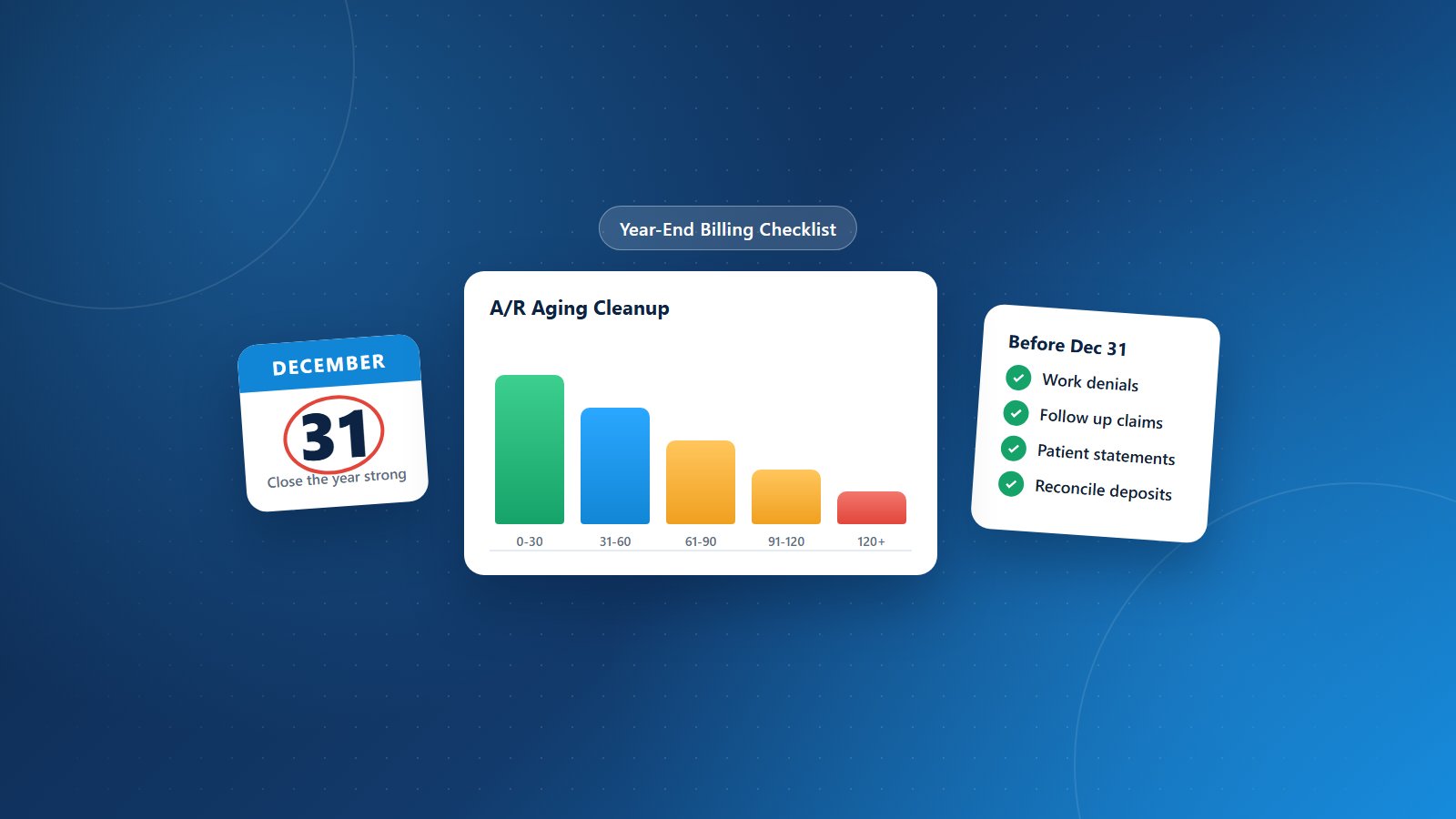
Start with visibility. Pull an accounts receivable aging report broken out by payer and by aging bucket (0–30, 31–60, 61–90, 91–120 and 120+ days). This shows where your money is stuck and which accounts need attention first.
Prioritize high-dollar claims and those approaching timely filing limits. Claims in the 90+ day buckets deserve immediate follow-up because their likelihood of payment drops steadily with time.
2. Follow Up on Unpaid and Underpaid Claims
Work through outstanding insurance claims systematically:
- Check claim status for every unpaid claim older than 30 days.
- Identify claims that were never received by the payer and resubmit them promptly.
- Compare payments with your contracted rates to catch underpayments.
- Escalate stalled claims through payer provider representatives when needed.
3. Work Your Denials Before Deadlines Pass
Denied claims are recoverable revenue, but only if you act within the payer’s appeal window. Review all open denials, group them by reason and correct the underlying issue, whether that’s a registration error, missing authorization, coding problem or documentation gap. Submit corrected claims and appeals now rather than letting them carry into the new year.
Track denial reasons as you work them. Patterns you find now become the training and process improvements that prevent denials next year.
4. Check Timely Filing Limits by Payer
Every payer sets its own deadline for submitting claims and appeals. Create a quick reference of filing limits for your major payers and flag any claims at risk. Pay special attention to:
- Claims held for missing information or charges not yet entered.
- Secondary claims waiting for primary payer processing.
- Claims rejected by the clearinghouse that were never corrected.
5. Clean Up Unbilled and Missing Charges
Review your encounter logs and schedule against billed charges to make sure every visit and service has been billed. Unsigned notes, incomplete documentation and missing charge tickets are common sources of lost revenue. Work with providers to complete outstanding documentation so claims can go out before year-end.
6. Send Patient Statements and Make Collection Calls
Patient balances are easiest to collect while the visit is still recent and before new deductibles begin. Before December ends:
- Send clear, easy-to-read statements for all outstanding patient balances.
- Offer convenient payment options, including online payments and payment plans.
- Make courtesy calls on larger or older balances.
- Apply any unapplied patient payments and resolve credit balances.
7. Resolve Credit Balances and Refunds
Overpayments from patients or payers should be reviewed and refunded according to your policies and payer requirements. Leaving credit balances unresolved creates compliance risk and distorts your A/R reports.
8. Reconcile Payments and Deposits
Make sure every payment posted in your practice management system matches what was deposited in your bank account. Reconcile electronic remittances, paper checks and patient payments. Clean reconciliation ensures your year-end financial statements are accurate and makes tax preparation easier. Our accounting and taxation team can help with this step.
9. Prepare for January
Year-end cleanup is also a chance to prepare for the year ahead:
- Update fee schedules and charge masters for the new year.
- Prepare coding updates and train staff on changes.
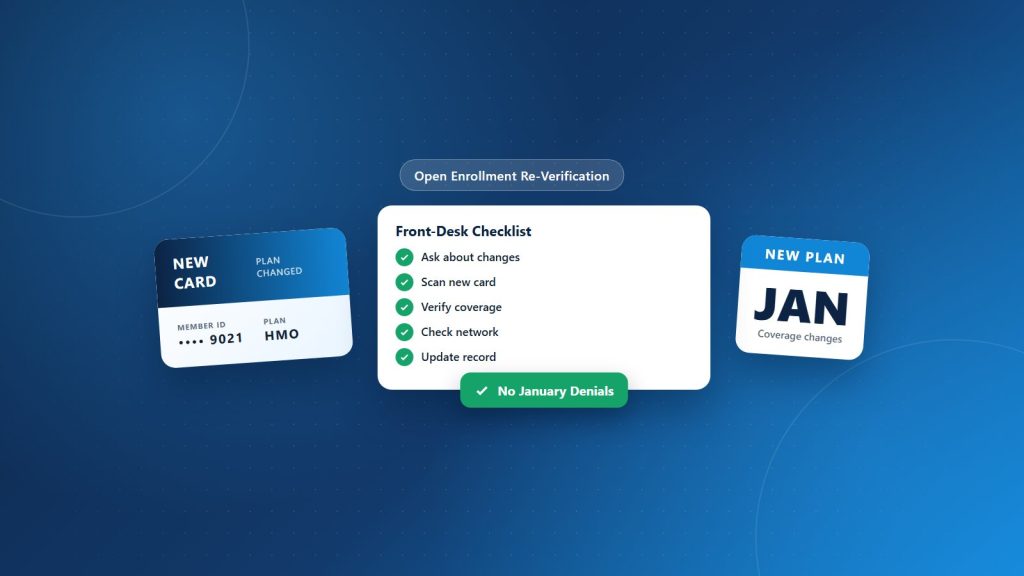
- Plan for eligibility re-verification as patients’ coverage changes.
- Confirm provider credentialing and enrollment is current with all payers.
- Review payer contracts that renew or change in January.
10. Review Your Revenue Cycle Performance
Finally, look back on the year’s key metrics: days in A/R, clean claim rate, denial rate, net collection rate and patient collection rate. Compare them with prior periods and set goals for improvement. If results have slipped, a professional medical billing audit can pinpoint the cause.
Close the Year Strong With PRCM
Year-end cleanup takes focused effort at the busiest time of year. Physicians Revenue Cycle Management helps practices recover outstanding revenue with dedicated A/R follow-up, denial management, payment posting and patient statement support. Our revenue cycle management team works your aging claims so your staff can focus on patients.
Want help clearing your A/R before deductibles reset? Let’s connect and start the new year with a clean slate.